Blog

Observe, Learn and Test: The Engineer’s Approach to Disc Golf

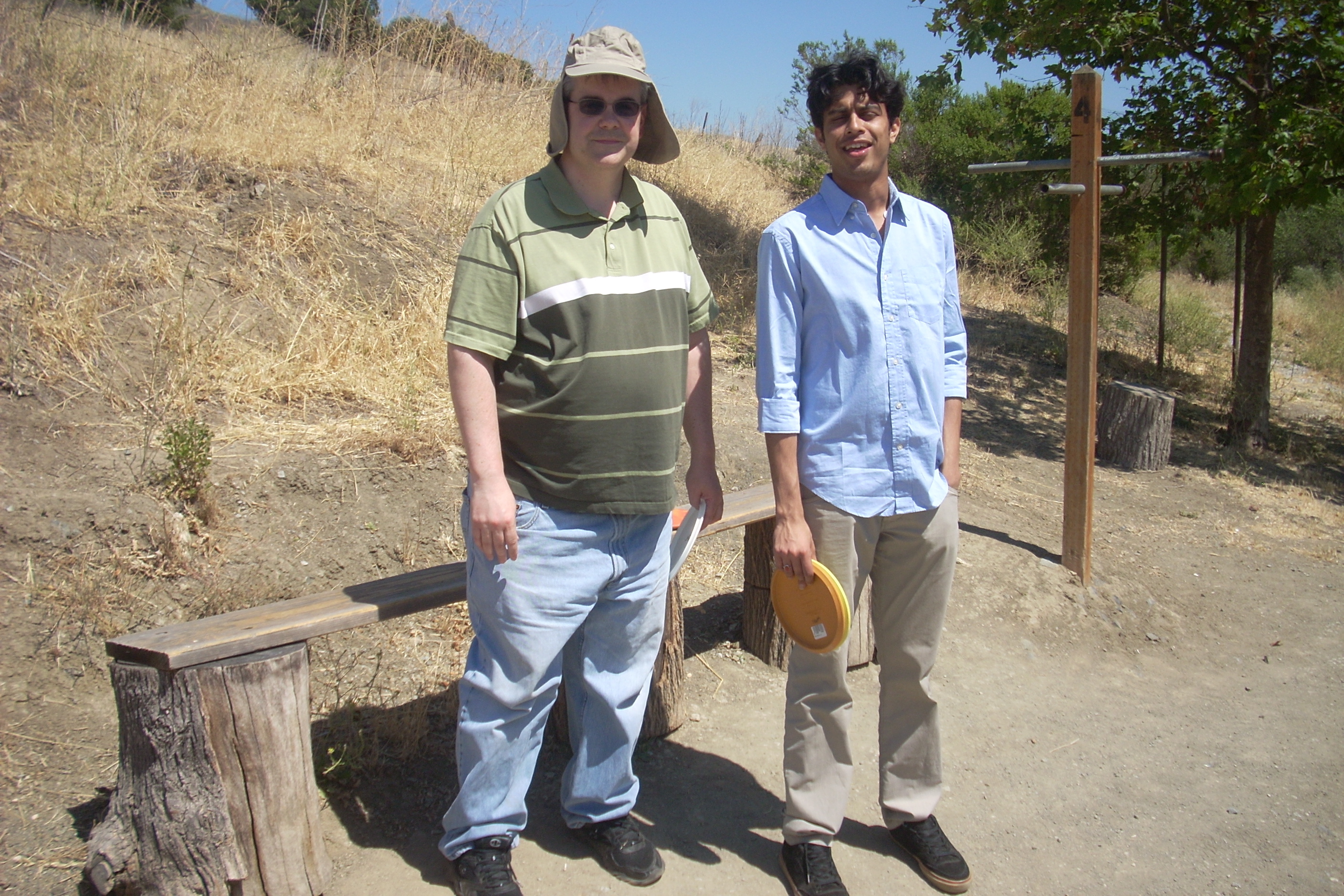
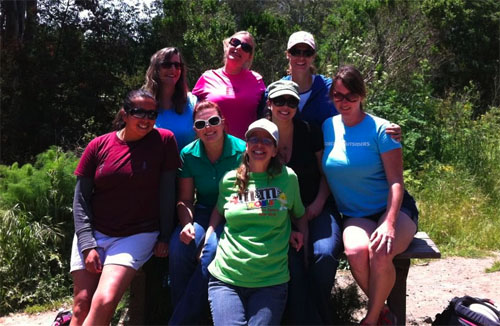
The School of Disc Golf recently hosted a team-building event for a group of engineers and other techies from a Silicon Valley company.

There were a few naturals in the group, especially one guy in particular who was launching some impressive drives and hitting long putts within 90 minutes or so of starting. I don’t think the group as a whole would mind me describing them as people whose finely honed instruments are their minds rather than their bodies.

This is not to say they were in bad shape — just not a group that, when looking at them, you’d think were jocks. They were average folks, like most golfers.

I noticed several instances of participants being able to observe their discs flying a certain way and quickly assess why. They then went about experimenting (with the help of our instruction) and making modifications to their techniques.

The really cool thing that made me want to write about that outing is the one trait this group of very regular people with very modest athletic skills had in common — an analytical, engineering-type mind. For people who are curious about how things work and enjoy solving puzzles, there aren’t many more interesting sports than disc golf.

The participants at this event improved noticeably from the beginning of the day to the end. They asked a lot of questions and, as I mentioned already, made adjustments — often dramatic — as if to test out theories for themselves on why their disc went straight up in the air, or sliced immediately left.

And give ‘em credit. Most were able to get their throws flatter and straighter by making changes, monitoring the feedback, and then making more changes based on the results.

Disc golf is known for being easy to learn, but hard to master. The aerodynamic principles of a flying disc has a lot to do with that. Leave it up to engineers to make the most of something like that. A perfectly round ball with a smooth surface will only react very subtly to efforts to manipulate its flight path, but a flying disc is totally different. It interacts with the air flow much like the sail of a ship, with even the smallest variables magnified and their effects plainly obvious.

One player really heeded the instruction he received on the differences between classic putting and throwing backhand. Once he understood the idea that a putt is more of a forward thrust than a throw, he really got the hang of it and started hitting the chains on everything. The thrill of solving the puzzle was quite obvious.

Another mild-mannered computer programmer was able to practically double his distance by employing the basic instruction of reaching back with the disc as far as possible on backhand shots before beginning the throw. He recognized some universal principles of physics — I think he mentioned catapults as being analogous — and was excited when he saw that they clearly applied to disc flight as well.

Today’s key point is to be like this group was, even if you’ve played for years. Do some research, experiment with your technique, and pay close attention to the results. Then experiment some more. Make full use of your mind as an instrument for improving your game.

Getting better, when you understand why it happens and can therefore consistently employ the improvement, is one of the most satisfying aspects of any sport. With its many possible throwing styles and the aerodynamic properties of a flying disc, disc golf makes it easier to do that than most others athletic endeavors. Take full advantage of that and you’ll get even more out of the game.

Product Review: Scoreband multi-use scorekeeping device

The ScoreBand is a worthy addition to any disc golfer’s bag.

(Editor’s note: Two people associated with disc golf blog Rattling Chains tested out ScoreBand, a scoring watch that also works for tennis and other things. The first part is by School of Disc Golf’s lead instructor Jack Trageser, with a review by Rattling Chain’s lead blogger P.J. Harmer following after that).

One thing in particular piqued my interest when asked to review the ScoreBand as a method for tracking disc golf scores and statistics — I wondered if it would work for someone (namely, me) that has made a persistent effort over the past several years to remain ignorant of his cumulative score during a round.

As I’ve discussed before, a primary disc golf philosophy that I espouse centers on playing disc golf in a vacuum. In a nutshell, that refers to being completly immersed with the current shot rather than letting your mind wander about things like past shots and holes, future shots and holes, other games, what’s for lunch, and especially the distraction that pertains to this review . . . total score.

Keeping that in mind, I’ve yet to come across a method for recording my score among the traditional pencil-and-card and smartphone apps. I’ve trained myself to lock each shot on each hole into my memory banks without tallying the total until the round is over.

When I heard how ScoreBand works, however, I thought it might be the first scoring method to allow me to record my score using a device more reliable than my own grey matter — without letting the insidious organ get in its own way.

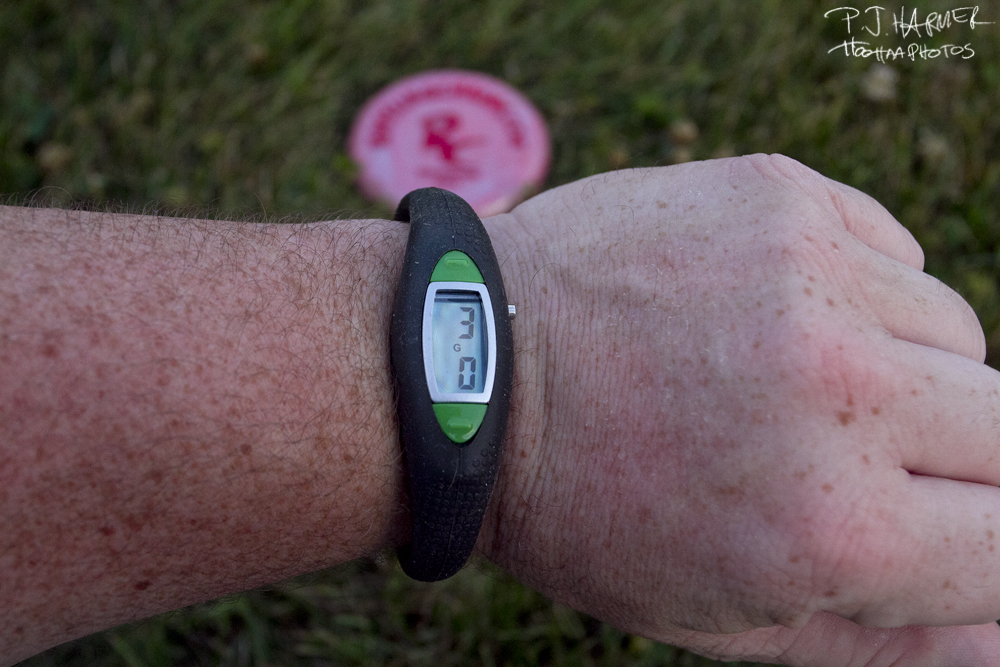
The design sets it apart from other scoring tools by being something that is worn, rather than carried, taken out and put back away repeatedly. Plus, it has a watch function, too, so you can wear it instead of your normal watch.

ScoreBand’s method of keeping track of the score lends itself to my personal idiosyncrasy as much as its ergonomic design. The user hits one button for each stroke to keep score on the current hole in the upper display, then presses and holds another button to add that hole’s score to the total score in the lower display.

Scoreband is a very cool concept and could help many people with disc golf scoring and many other items.

In theory, this lets a player hit the buttons the required amount of time for strokes and hold it the right duration of time to advance from one hole to another without having to even look at the screens and remain as oblivious as he or she wishes to be where total score is concerned.

In practice, however, I found using the ScoreBand to not be quite so simple (remember, these issues are magnified by my desire to not know my cumulative score during the round).

For starters, there is the issue of when to hit the button to record each stroke. Do you do it right after each throw, or wait until the completion of the hole and hit the button multiple times? In my case, during the five test rounds I played, settling on a system was not easy. In fact, it never happened. I tried to do it throw-by-throw, then would realize on the next tee that I had slacked, requiring me to enter all the strokes on that hole at one time. And it got worse, as a few times I realized I had forgotten for two entire holes.

I guess that can happen with other scoring methods as well, but having to hit a button for each stroke makes it more of an ordeal.

The upper display shows the stroke count for the current hole. When the hole is complete, you press and hold a button and the hole total is added to the round total on the lower display, while the upper one resets to zero. If you forget to record a stroke, or a hole or two, there is no way to tell which hole you last recorded successfully. It’s also an issue for those who want to know how they did hole-to-hole as at the end of the round all you have is total score.

The bottom line is that ScoreBand delivered in the main way I hoped it would. As a stretchy band worn on my non-throwing wrist, it was accessible and out of the way. Once I learned how to use it, I could hit the buttons without looking at the screens, enabling me to avoid knowing my score.

But it either takes time to get the process down to a routine, or I’m just inept at it. Of the five test rounds I played, my total came out wrong twice. I rely on my memory-based compilation after the round is over. Since I can recall each shot in my mind’s eye, it proved my use of the ScoreBand wasn’t perfect. I don’t think the device was faulty — it was a combination of my attention span and the user interface.

In January, ScoreBand was recognized as the Best Product Concept at the Professional Golf Association merchandise show. The people who awarded ScoreBand put more thought into things like that, so if you you’re like me and want a method for scoring that is handy and unobtrusive, ScoreBand may be for you.

P.J. Harmer

I’m a stat junkie.

No matter what I do, statistics fascinate me. Whether it’s softball or finds in geocaching or comparing scores on the disc golf course, I really get into it.

One thing with disc golf and me has always been keeping the score. Though there are many phone apps or pencil-and-paper ways of keeping score, I’ve been in search of a quick and easy way of keeping score as I play a round without fumbling with my phone or a pencil.

Insert ScoreBand.

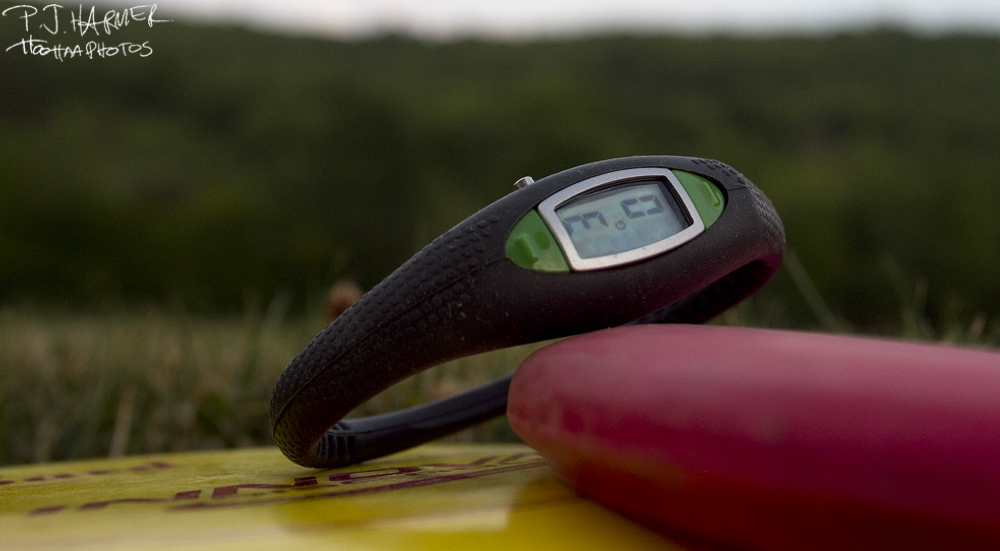
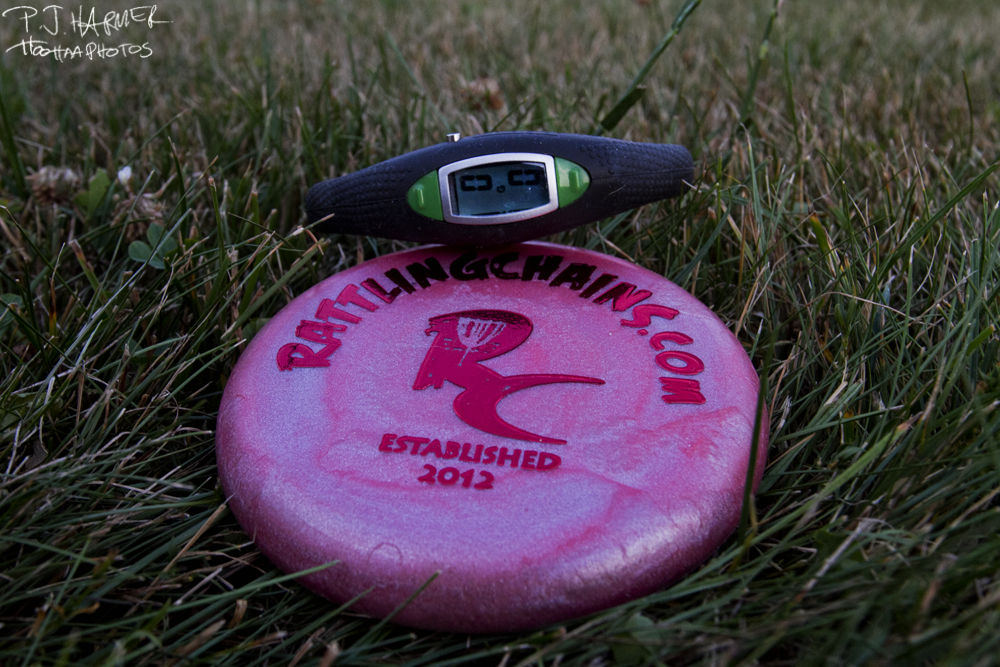
ScoreBand is a rubber wristband/watch. The company calls it a “revolutionary quick-touch, 4-in-1 scorekeeping wristband engineered for sport.” It stood up to the challenge, too.

First, the construction is a one-piece rubber wristband. There are several sizes and colors to choose from, so you’ll be able to find one (or more) that fits your style. It’s comfortable to wear, though I’m not sure I could wear it all the time as I did notice it was there and with the rubber band, it could get a little tough to deal with at times.

Still, this band is easily worn for a round or two of disc golf. I wore it on the opposite wrist of my throwing hand, so I never knew it was there. Also, it made it easy for me to click the score.

I can’t comment on how this would be for ball golf as I always avoided wearing anything on my wrists when playing. I’m sure if people were used to wearing anything when swinging a club, this wouldn’t bother them. The same could be said for tennis.

The ScoreBand has four modes:

  • Golf
  • Tennis
  • All sport
  • Time

Those are four excellent items as it allows you to get multiple uses from one wristband. For golf, it keeps your hole score as well as your cumulative score. For tennis, keep game and set scores.

Though this is something that will be a permanent addition to my disc golf regiment, the all-score mode might be the most intriguing part of this band.

As the company notes on its site, there are many uses for this mode — including some other disc and ball golf functions, such as keeping putts, fairways hit or greens in regulation.

  • Other items that the watch can be used for:
  • Pitch counter for baseball or softball
  • As a head counter where attendance is needed
  • To count inventory
  • Keeping track of how many times you take medication
  • Lap counter

Truthfully, the options are endless with that mode.

Using the band is easy. There’s three buttons — two on the display and one on the side. Once you get the hang of how the watch works, it’s simple to use while playing. The key is remembering to use it.

Though I don’t often do it, perusing the instructions is a smart move and messing with it for a while before taking it out will help you get used to the controls so you can work it while on the course.

ScoreBand is a comfortable band that is easily used throughout a round.

The best part in my eyes?

It keeps your score as you go along. So if you click it after each throw or shot, you can see what you’ve done on each hole. At the end of the hole, add it to your overall score and you’ll have a clean slate for the next hole.

My only issue is it can get a little confusing on how to take your round score and add it to your cumulative score. You have to hold one of the buttons down to have it do this, but in the end, once you get used to it, it shouldn’t be an issue.

Though I love using my phone as a score card, the reality is it can sometimes get cumbersome to take the phone in and out of your pocket, get the screen up and type in scores. In the amount of time that takes, I’m at the next tee or shot with the score already in my watch.

If you are looking for more in-depth stats, the phone apps are probably the best. But if you are out playing and just want a quick and effective way to keep your score, this really is the way to go.

ScoreBand is $29.99, but it’s durable and something all disc golfers should consider having if they want a nice and easy way to keep score during rounds.

Falling putts can lower your score

Disc golfer’s familiar with the rules of the sport recognize the term ‘falling putt’ as an infraction that occurs when the disc is within 10 meters of the target. The rules (see 803.04 C) clearly state that a player – when inside this ‘putting circle,’ must demonstrate full balance after releasing the disc before advancing to retrieve his or her disc. This is to ensure players cannot gain an advantage by shortening the distance their disc has to travel. If this rule were not in place, putting would turn into a Frisbee-long jump hybrid, with players taking 10 paces backward to get a running start before leaping toward the target. I can easily imagine some nasty accidents as well, with ‘slam dunk’ attempts going horribly awry. Luckily the 10-meter rule prevents gruesome player/basket collisions while at the same time preserving the purity of the flying disc aspect of disc golf putting.

Of course, when this rule is broken it is usually much more subtle than that. The player inadvertently leans into the shot, and is unable to avoid stepping or stumbling forward. Hence the term ‘falling’ putt. But outside 10 meters no such rule applies, and using your entire body to gain added momentum can be a great strategy. If . . . . and only if, it is done correctly. Plus, even outside of the 10 meter putting circle it must be done legally.

The Disclaimer

803.04A makes it clear that the main restriction in this regard is that one point of contact (foot, knee, etc.) must be in contact with the ground at the time the disc is released, directly and no more than 30 centimeters behind the marker. So keep this restriction in mind as you read the rest of this post. Even outside 10 meters, it is illegal to break contact between your supporting point (usually a foot) and the surface behind your marker before you’ve released the disc.

The Likely Scenario

All players are different in terms of physical capabilities, of course. But generally speaking most of us can only use our putting style to a distance of somewhere between 30 and 40 feet before the need for more ‘oomph’ robs our form of its consistency and affects our aim. We put so much extra effort into getting the disc to go far enough that smoothness and fluidity is replaced by herky-jerky and disjointedness. When this happens we rarely get the disc to fly where or even how we want. So not only do we not make the putt, but we often are left with a challenging comeback putt as well.

At this point, players recognizing the need for a better approach will embrace one of two different strategies:

  1. Change from a putting, flip-style throw to a ‘regular’ throw, where the player stands sideways to the target and pulls the disc alongside his her or his body- a typical backhand throw. This method solves the need for increased power and allows the player to regain smooth form, but aim usually suffers considerably since the throwing line is no longer aligned with the sight line.
  2. Take advantage of the fact that the rules allow players to ‘fall’ forward outside 10 meters. When it’s legal, and done on purpose, this is usually referred to as a ‘jump putt’ since the result appears to be a jumping motion towards the target.

I’ll usually take the second option, but not always, depending on distance, terrain, obstacles, and situation. And like most players, I initially took the term ‘jump putt’ too literally. The term implies that you’re supposed to jump into the putt, or as you putt, but I learned there are two problems with that. First (as noted above), if your foot behind the marker leaves the ground before the disc leaves your hand, that is a rules violation. I know it’s often hard to tell, because it’s almost simultaneous, but it’s better to avoid disputes of this nature entirely if you can.

The other problem with trying to jump as you putt is that it doesn’t work! If your feet have left the ground before you release the disc, or they leave the ground right as the disc leaves your hand, you don’t really get the power you’re intending to get. Think of a shortstop in baseball trying to jump in the air and then throw the ball. It can be done, but without feet planted on the ground the arm has to supply all the power. The same is true in disc golf. Also, aim is much less consistent without the stability of those feet on the ground.

Enter the legal falling putt.

The Solution & Unique Technique

I’m not sure how I discovered this, but it enables me to putt from probably 70-80 feet with good control and consistency. By taking the straddle-putt stance (legs apart, toes pointed at the basket), then falling slowly toward the target, and putting at the last moment before my feet leave the ground, I get the best of both worlds. The momentum adds significant power in a smooth, fluid way, enabling my arm speed to stay the same as it is on a much shorter putt. And as long as I don’t get too eager and try to jump and throw at the same time, it’s remarkably accurate.

A top pro who has embraced a version of this strategy is Dave Feldberg. His approach is to ‘walk into’ long putts that require extra momentum, allowing him to use an in-line style (as opposed to switching to a straddle style) similar to his normal preferred putting style. This video clip from the 2008 Scandinavian Open (the putt occurs fast in the first second of the short clip, so you’ll have to replay it a few times) shows how he walks into the putt to gain power. His actual technique differs from mine, but the basic strategy is the same: Leverage the extra momentum of the entire body moving forward, but do so in a way that does not sacrifice the fluidity of a good, consistent putting motion.

The Bottom Line

  • Disc golfers use a separate technique for putts – where the body and eyes face directly at the target – for a good reason. What is lost in power is more than gained in the accuracy that results from having the flight line and sight line on the same line. But . . .
  • There is a definite limit to the the power that can be generated while facing the target.
  • When outside the 10-meter circle, it makes all the sense in the world to maximize power while still facing the basket (and maintaining the accuracy advantage) by legally using body momentum. But . . .
  • Techniques that cause the player to leave his/her feet too soon negate the added power by throwing off aim and timing- and might also make the throw illegal as well.
  • By using a ‘legal falling putt’ or ‘walk-into’ technique, players can gain valuable extra power without sacrificing aim or timing.

It takes some practice to get it down, but this approach will eventually result in a way to hit more long putts without as much risk of long comeback putts. Try it, you might like it!

Building blocks of basic backhand technique

Disc golf is still enough of a niche sport that by the time most of us are ensnared (like a putter caught in the inner chains of a Mach III) by an obsession to get better, we’ve already been heavily exposed to other more mainstream sports.

That reality has definite advantages for me, as an instructor, because it helps when I’m teaching a disc golf concept related to technique (or even mental stuff) to be able to draw analogies between disc golf techniques and those of other more familiar games. If someone has already learned a similar motion, it’s easier to recall that motion and apply it to disc golf than to learn it completely from scratch.

Case in point, my first remote session with a novice who was already loving disc golf but as of yet unable to throw as straight or far as his friends. We’ll call him Lou.

Without actually watching Lou throw live and in person, I had to rely mostly on the spoken and written words we exchanged on the subject in choosing my advice for him. However, I knew a couple other things that would likely prove useful.

First, players in the earlier stages of the disc golf learning curve usually make many of the same common mistakes and therefore see many of the same negative results from those mistakes. Second, Lou has talked on many occasions of being an avid softball player, so I knew right away that he would be able to easily understand the comparisons I like to use between throwing a disc golf disc using the backhand technique and proper batting technique in baseball.

Weight transfer and balance

One of the most common mistakes I see players of all levels make with the backhand shot has to do with transferring weight from the back foot to the front foot.

disc golf lessons
Figure 1: The stick in this photo illustrates the line on which players pull back the disc and throw that results in shots that pop in the air and don’t go very far.

A good backhand throw derives most of its power from the back, torso, and legs rather than just the arm. In this way (and some others, which we’ll cover soon) throwing a disc backhand is just like swinging a baseball bat with the goal of hitting the ball with any kind of power.

In both cases you’re standing at a 90-degree angle to the direction you want to throw/hit. And in both cases you want your weight to shift from your back foot to your front foot at a precise critical time. With baseball, that time is a fraction of a second before the bat hits the ball. With disc golf, it’s right as the disc is passing your body mid-throw. Any sooner in either case and you’ll rob yourself of all that power you had coiled up from your legs and torso.

Using the baseball analogy, think of what a hitter looks like when he’s way out front on a change-up or curve ball. And in the case of a backhand throw in disc golf, you’ll also likely mess up your balance and lose accuracy as well as distance.

throw straight in disc golf
Figure 2: The stick in this photo shows a proper line for a typical backhand shot intended to fly flat and straight. Note how the stick is (nearly) parallel to the ground.

Most often, the reason that disc golfers have weight transfer and balance problems is because they try to incorporate a run-up into their drives and longer fairway shots too soon. You’ve heard the saying “You have to learn to walk before you can run.” In disc golf it’s more like “before you can run-up.” Later in this post you’ll learn a great exercise for “learning to walk,” in terms of throwing a proper backhand shot.

Reach back, line, and angle

Another parallel between hitting a baseball and throwing backhand is a literal parallel. In baseball the best chance a hitter has to hit a line drive is by swinging fairly level — or parallel to the ground. The big uppercut may seem attractive to those swinging for the fences but, more often than not, results in lazy fly balls or pop-ups. In disc golf the natural tendency (usually ingrained from previous experience ‘flipping’ a Frisbee disc) is to throw on a low-to-high arc that is much like an uppercut in baseball — and the results are predictably similar.

Those throws that go way higher than you wanted (and much shorter) are the product of dropping the disc down to knee level when you pull the disc back and releasing it at eye level. There are, of course, times when you want this type of line, but not often, and rarely as exaggerated. For most throws the flatter, the better.

Continue reading “Building blocks of basic backhand technique”

Nine secrets of the women of disc golf

The ladies who played in the advanced division at the Masters Cup this past weekend. Pictured are: Front — Anna Caudle. Second row, from left, Victoria McCoy, Michelle Chambless, Lacey Kimbell, Cyndi Baker; and third row, from left, Christine Hernlund, Jenny Umstead, and Crissy White. (Photo by Alex Hegyi).

OK, maybe the title is a little misleading. Calling them “secrets” is overdoing it a bit, and this is about much more than that.

I spent some time last weekend talking to female competitors at the Amateur Masters Cup presented by DGA in Santa Cruz, Calif., and some of their answers might be new and useful information to the guys who play disc golf.

But are they secrets?

What’s definitely not a secret is the fact that disc golf is, and always has been, a sport played predominately by males. The breakdown of competitors in this A-Tier PDGA sanctioned event illustrates this point perfectly, as only 11 of the 158 registered participants were in female divisions. That’s less than 10 percent.

The eyeball test anytime you’re playing a recreational round on your local course will tell you that that ratio holds true in non-tournament settings as well.

So what’s the deal?

After watching the sport grow and develop over the past 25 years, I’ve got my own theories. For instance, in the early days of DeLaveaga — back in the late 1980s and early 1990s — seeing a woman on the course was rare enough to stop a guy mid-throw to ask a playing partner if he saw her, too. They had to make sure she wasn’t a mirage (or an hallucination, depending on the player). I later learned from the first female DeLa pioneers that a main deterrent was the lack of a restroom on site at the time — not even a porta-potty. Not a big deal for the average guy, but enough to keep many women away.

While not all courses are as remote and facility-less as DeLa, back then plenty of them were similarly in open spaces. And besides the lack of basic facilities, there was also an non-policed “Wild West” feel to many courses. I have a notion that many women felt these courses were just unsafe enough — or at least could be — to discourage them from giving disc golf a try.


Finally, according to golfsolutions.com (part of the Golf Channel empire), only 22 percent of ball golfers worldwide are female. So disc golf seems to be repeating the pattern of its older and more venerable ancestor.

These points add up to the fact that although disc golf may be different now than it was two decades ago, when a lopsided male/female ratio was firmly established, it self-perpetuates (the heavy guy-majority keep bringing mostly their guy friends out to play) over time.

In short, changing an established trend is hard to do, and it doesn’t happen overnight. Just look at ball golf.

Kari Rose tees off on the 10th hole at Pinto Lake, where the Daisy Chains Women’s Global Event will be held. Rose is in the pre-registered field. (Photo by John Hernlund)

As stated earlier, disc golfers have ambitious goals for growing a sport that is better in every other way possible, so the question for today is how do we get more women playing disc golf?

In searching for solutions, I sought out women who are already hooked — the female competitors of this year’s Amateur Master’s Cup.

Suzie Weigand, a local who won the Women’s Masters division by six strokes, has played disc golf for five years. She said she primarily goes out with her husband but is playing more now because of the organized “ladies days” in Santa Cruz.

Weigand said gaining momentum is important for getting more women in the game.

“When more women start playing, it’ll mushroom because it’s such an accessible activity,” she said.

As for accelerating momentum, Weigand offered the common sense strategy of “starting when they’re younger, with youth programs and high school and college leagues.”

Chrissy White, originally from Nebraska and now living in Kingsville, Calif., is a relatively new player and has put that approach into action. Her seven-year-old daughter Haley tagged along during the first round of the Masters Cup. Haley said she, too, plays disc golf.

“A lot of women that have children don’t have a sitter to watch them while they play with their husbands or boyfriends,” White said. “Bring the kids along and not only do you get to play, but the kids are going to pick it up too.”

As Victoria McCoy, of Concord, Calif., walked to the first tee, she said a key is also organizing more events that focus on women and support women. Her husband was with her for this event, carrying her bag.

This idea seems like a good one as it’s one thing to tell women they are welcome to join the sport that has, historically, only considered the needs and interests of male participants. It’s a different approach to take the sport we lover and tweak things to produce and experience that appeals particularly to women.

That’s why this Saturday’s PDGA Women’s Global Event is so special. It could mark a seminal moment in women’s disc golf.

The Daisy Chains tournament, which is one of 41 scheduled as part of the Women’s Global Event, will be run in Santa Cruz and is headed by Christine Hernlund. She reiterated the approach and stressed the intention to give the event a decidedly female feel.

“We are trying to build a tournament experience that not only avoids the common flaws of other tournaments but also has so many extras and attention to detail that the women will expect more from tournaments in the future,” Hernlund said. “The artistic and creative energy our local women have poured into this event will showcase what is possible when we women unite our strengths in a collaborative effort.”

This is all great and it’s nice to know about getting more women in disc golf, but what about those nine secrets of the women of disc golf?

Also know that these tie in directly with the main theme — increasing the numbers. You see, the last question posed to each woman was “what is the thing male disc golfers do or don’t do — on purpose or, more likely, out of ignorance — that ticks you off the most?”

Maybe if guys know what these items are, we can stop doing them and hopefully increase the odds of more women getting hooked on the game.

The nine items are:

  • They give us, especially beginners, heavy discs.
  • They get intimidated when we out-drive them, even if it’s once every 100 throws, and will often say something stupid.
  • Some of them use really foul language and can’t keep their temper in check.
  • They say “nice shot” when I know it was a really crappy shot.
  • I hate bad attitudes. Have fun with the game.
  • Stop coaching us all the time — we know what we’re doing.
  • Give credit for the good shorter shots and congratulate women when we’re doing our best.
  • Appreciate the women that come out and enjoy the sport with the men.
  • Stop looking at our butts!

That last reply was followed by much laughter as the group headed to their drives after teeing off hole one.

It would seem women do have more fun with disc golf.


This post was written for and originally appeared at rattlingchains.com.

To save strokes near the basket, think like a golfer

Disc golf and ball golf can both reduce a grown man to tears, and they can both elicit language from a grown woman that would make a Marine drill sergeant blush. Is it because we, the loyal devotees of our sport, are mostly unstable people drawn to these tests of sanity like moths to a bug zapper?

BZZZT!

Well, maybe. But I have another theory.

Sure, bad breaks happen with heartbreaking and hair-pulling randomness — like my recent 40-foot putt for birdie that hit the cage 1/2 inch short of paydirt, then rolled down the sloped green and across an OB line 60 feet away (result: double bogey). Why?

No, really. WHY?!

But that kind of frustration dissipates quicker than the other kind. I’m referring to that instinctive knowledge, after a round, or a hole, or a throw, that we could have done better. Specifically, that we would have done better if not for some type of mental error. That kind can keep you tossing and turning at night.

Maybe it was a poor decision. Or the fact that it became quite obvious — a fraction of a second after the disc was released — that the wrong thought dominated the wrong lobe at the wrong time. Whatever. I’m convinced, though, that the mental side of golf is at the root of the love/hate paradox that keeps most avid players coming back again and again.

You see, even those of us with the most marginal physical skills know that if we can only squeeze all the potential out of those skills by playing smarter, our scores will improve immediately. As you read my posts here on Rattling Chains, you’ll discover this is a favorite theme of mine. We can all improve simply by playing smarter, and there are many, many, many ways to do that.

Saving strokes on the green

And what better place to start than on the green, around the basket? Mistakes related to putting are the quickest way to take needless strokes (from birdie to bogey, just like that!) so it stands to reason that plugging leaks in one’s putting game immediately translates to lower average scores.

Sticking with the leaky boat metaphor, the place to start is by identifying the biggest leaks that are the simplest to fix. In the case of disc golf putting, one of the big gushers for many players — even those that have played for years — is the line and the speed of the putt.

If I had to pick one chronic error that I think more than any other defines the separation between players who don’t consistently score well from those who do, it would have to be leaving comeback putts that are unnecessarily long. Talk about adding insult to injury! And when it’s not just bad luck, avoidable comeback putts are the result of putts that have too much speed, a line that is too flat, or (usually) both.

You have a 35-foot putt you think you can and should make, you go for it, and miss. Now you’ve got a 25-foot comeback putt, and the knowledge that you might three-putt from 35 feet tends to make it even harder to focus on that comeback putt. You feel like you’re taking such a wasted, unnecessary stroke- and you’re right. You won’t make every putt from 35 feet, but you should never do worse than two-putt from there.

The secret is to develop a line-and speed approach to putting that balances two factors — trying to make it in the basket, and making sure you leave a short, stress-free comeback putt – using a ratio that corresponds to your odds of making the putt.

The best way I can explain this concept is to use ball golf as an example, specifically a technique referred to as “lag putting.” When a ball golfer “lags” a putt, his focus is on making sure the ball ends up close to the hole for an easy next putt.

Depending on the distance from the hole and the difficulty of the perceived comeback putt a lag putt may be 50 percent “go for it” and 50 percent “make sure it ends up close,”  or it might be all about getting it close without even a thought of getting it in. But the main point is that there is some thought given to the idea that the putt might not go in on the first attempt, so golfers at least try to use the right amount of touch to ensure it ends up close enough to get it in on the next attempt.

As disc golfers we need to embrace the concept of the lag putt and make it our own. The sight of players chucking a disc right by the basket as if it were a shooting gallery rather than a golf course is way too common. Here is my explanation of a lag putting strategy, adapted for disc golf– with a bonus side benefit:

Figure 1

Line of the putt

In the simplest, most easily visualized terms, the line of any shot is the imaginary line that traces the path your disc travels from the time it leaves your hand to the time it reaches the end of its flight.

Figure 2

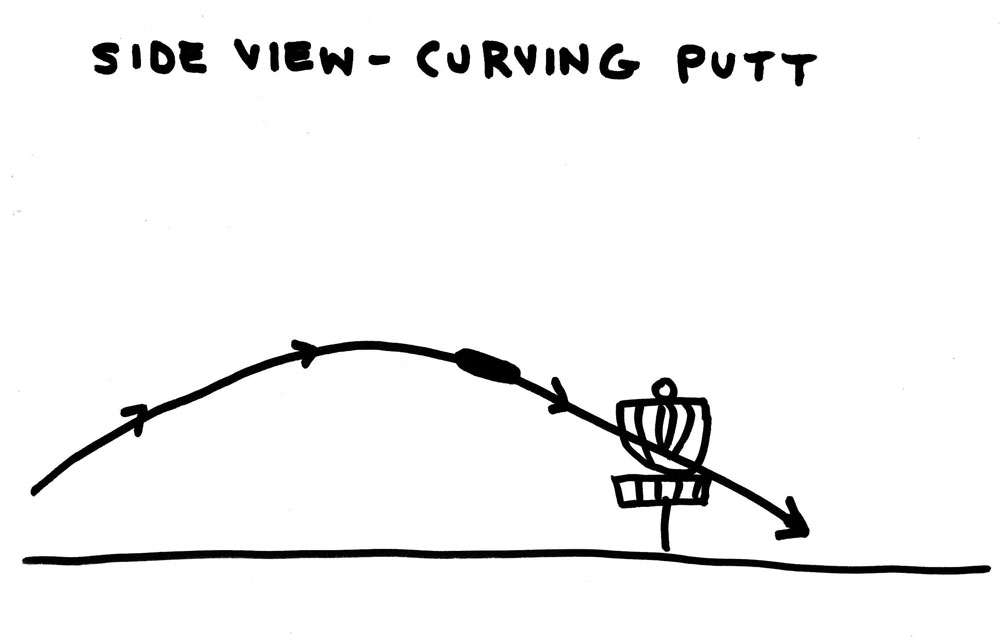
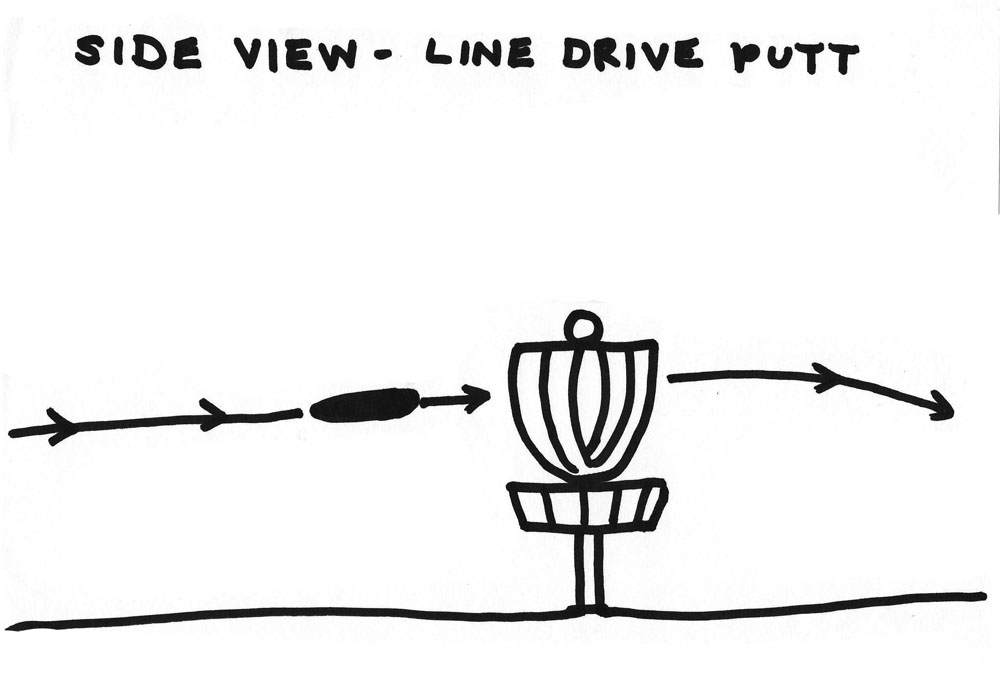
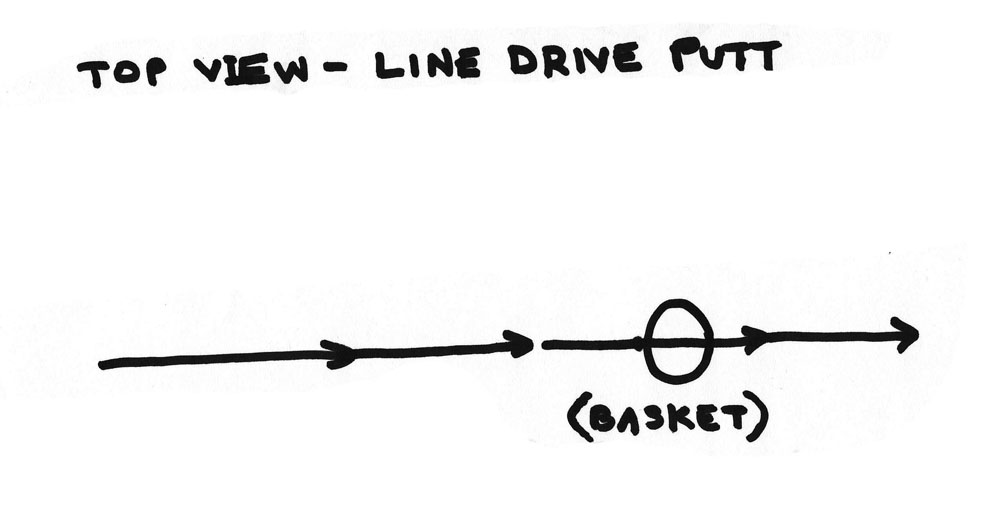
Obviously every shot in disc golf is slightly different, due to distance, obstacles, elevation change, etc. So it’s impossible to take a one-size-fits-all approach to choosing a line. But  in general the farther away from the basket you get — as your chance of making it decreases — you want your line to be more of an arc, and less of a straight line (figures 1 and 2).

The arc should be a combination of up-and-down (like shooting a basketball) and side to side. The result should be putts that are dropping and curling as they approach the basket as opposed to charging by like a train ignoring one of its stops.

Figure 3

Speed of the putt

The speed of the putt it closely tied to the line, since getting a disc to arrive at the end of a correctly chosen arc involves using just the right “touch,” which is another word for speed. But it’s worth mentioning separately because for many people it’s easier to learn this technique from a speed-and-touch approach than from an arc, or line, approach (figures 3 and 4).

Figure 4

This is especially true if you are far enough from the basket that you can’t use a true in-line or straddle putting technique, and are instead throwing your putter. Say from 70-100 feet. Far enough that you gotta throw it, but close enough that you want to at least give it some kind of run. In this case, the speed control – like lag putting in ball golf – is of utmost importance.

For putts like these the idea is to throw it just far and fast enough so the disc runs out of juice as it gets to the target. Right-handed backhand throwers want to aim high and right so the disc flies straight most of the way, then ‘falls’ down and left toward the basket on a hyzer angle.

The Bonus

Chains may be the iconic part of a disc golf basket, they can make beautiful music, and they do an amazing job at snagging discs. However, the object is for the disc to end up in the basket, and therefore longer putts with some downward momentum generally have a better chance of going in- particularly putts that are slightly off-target. So adopting an approach that combines the right arc and touch not only leaves shorter comeback putts . . . it gives your first putt a better chance to go in, too!

The Exceptions

  • On putts that are short enough that you know you should make them 99 percent of the time, I still recommend putting just hard enough to get a firm, straight line to the middle of the chains. On these putts it’s all about confidence, and tentativeness is your worst enemy.
  • On downhill putts — especially those where the green continues to slope downhill after the basket — going for it is do-or-die. If you decide to go for it on an downhill putt, using an arc or too much touch in the hope of not going too far past is a surefire way to miss completely. If you’re going for it, putt hard enough to keep it straight and flat. If you’re not sure you can make it, lay up.

This post originally appears at rattlingchains.com

Rattling Chains, an everyday disc golf blog

The School of Disc Golf is excited to announce that instructor Jack Trageser has joined the new Rattling Chains disc golf blog as a blogger focused on – what else – instructions and advice to help players improve their games.

All Rattling Chains posts will appear on this site as well, but information specific to the School of Disc Golf will usually appear only in this space.

You can read the post announcing his joining Rattling Chains here, and his first post for the site here.

Playing always trumps watching; Pinto Lakes manicured fairways

As a kid, I remember watching football games on TV. I’d be interested to watch my heroes perform, for sure, but when halftime came around I was much more excited about actually getting out to the street and doing it myself.

I think the same holds true for disc golf- or for that matter any sport that an average person can play well into middle age and even beyond. I love the fact that Discgolfplanet.tv enables me to see the top pros (especially Nate Doss, for whom I have a friendship and hometown-based rooting interest) compete in the top events as they happen. But if it’s a choice between watching them or heading out to Pinto Lake to play a competitive round myself . . . it’s not a difficult decision. Doing beats watching every time.

I mention this because it’s a truism that applies directly to what I believe are well intentioned but misguided efforts to introduce disc golf to the masses that have yet to discover its charms and benefits.

Pick any sport that people watch en masse – either live or on TV – and they fall into one of two categories: Either they have spectator appeal because they are difficult and/or dangerous, like cliff diving, downhill ski racing, or (people DO watch it) figure skating; or, on the other side of the spectrum, it’s a sport we can all play, or have played at some point in our lives, like baseball, soccer, football, basketball, tennis, or . . . golf.

In the case of the second category – into which disc golf falls – there needs to be a critical mass of people that play the sport before there can be any hope of it being attractive as a spectator sport, since the only reason we’d watch such a sport is the fact that we identify with it – however remotely – as participants. Yet the overwhelming majority of disc golf promoters seem to be approaching their promotion with an exactly opposite approach. They keep trying to gain major sponsorship for our sport which is neither dangerous or difficult, in the hope that that will then generate the attention and/or funds required to get it broadcast on television, which will then make it appeal to the masses. Puzzling, no?

Speaking of Pinto Lake (I spoke about it in the 2nd paragraph of this post, if you didn’t notice), that course is now my clear and away my favorite in Santa Cruz county- despite (and in part because of) the aggravation that several of the holes routinely bring. The upper meadow holes are now being mowed regularly, thanks to a donated riding mower and an obsessive course patron saint. The fairways are carved out of natural grasses and brush, and each one is bordered with OB markers and rope on each side. They are as pleasing to the eye as they are displeasing to the score. For disc golfer on the Central Coast they offer quite a different type of challenge. Check it out:

Memorial 2012

The Memorial Championship presented by Discraft began yesterday in Arizona. This event marked the beginning of the PDGA National Tour Presented by Vibram Disc Golf, as it has for years now. And because the season’s first major event always holds more promise than others in terms of significant leaps forward for the sport, I tend to watch for a few key indicators to see if this year will be ‘The Year’. Maybe I should stop doing that. But I can’t ‘un-observe’ what I witnessed yesterday via DiscGolfPlanet.tv’s live coverage, so I might as well share some thoughts.

First, some perspective: As a big baseball fan I can imagine how exciting it was when in 1939 fans around the country were able to see a live game on TV for the first time. The picture was grainy, and the camera angles limited to wide-angle, overhead shots . . . but they could actually watch a game they cared about without being there AS IT HAPPENED. That’s how most of us feel about DiscGolfPlanet‘s live disc golf coverage broadcast on the internet. The video may be severely limited, the commentators understandably spotty, but we can get the gist of what’s happening. For disc golf fan(addicts), especially those who personally know the competitors, that’s enough.

But here’s the rub: For anyone not intimately familiar with disc golf, the things that make the sport great won’t come through the screen. For whatever reason – lack of funding, I’d guess, or possibly ‘first-game’ rust that will hopefully be gone by the end of this event – the network seems to have taken a step backward from last year. There were video/audio syncing issues, lots of fumbling by the various on-camera personalities, and only one camera following the action. Here again, I must throw in the caveat that the phrase ‘bleeding edge,’ which was originally coined in Silicon Valley to describe the pains and sacrifices suffered by tech pioneers, is aptly applied here as well. John Duessler and everyone else associated with DiscGolfPlanet deserve tons of credit for doing what they do. I only hope they can continue to do it with less than 1,000 worldwide viewers tuning in at a time.

——–

Aside from the coverage, every time I think of the Memorial my thoughts return to a couple other big issues I have with the National Tour. How can we hold a marquee event on courses that aren’t even closed to other activities, like bike riding and picnicking? Imagine a surf contest where Joe Shmoe from the valley cuts off a competitor trying to catch a key wave. And after playing the event once, in 2003, I still can’t believe an NT event would have players teeing off grass or anything less than the best teeing surfaces- yet I saw just that yesterday. Some teepads at Shelly Sharpe park are actually painted lines on a walking path, and others are rubber pads so uneven that players are allowed to tee from the dirt next to them. I know the Memorial produces a great all-around experience and perennially has a top payout . . . but again, what impression can we expect outsiders to have when they see something that appears so transient?

————

Another issue that’s been on my mind lately – and with Dave Feldberg’s ridiculous -16 for 18 holes yesterday came to the forefront – is the fact that golf is most compelling as a spectator sport when the players are constantly challenged to make par. In ball golf, the courses on which majors are played are made extremely difficult for this very reason. Whatever it takes – more hazards and OB is my guess, since distance doesn’t seem to have much effect – our top players need to be made to struggle more. Par saves are more dramatic than birdie tries, and drama is what makes a sport compelling for spectators. By the way, did you know that the course with the shortest average hole length at the 2011 Pro Worlds, by, far, was famously technical DeLaveaga- yet it produced the highest average scores for each division? Just saying . . .

————–

Finally, an observation on one division in the Memorial. Jon Baldwin, who leads the Master division after the first round at -8 with two other trailing him at -4, will be hard to catch. He has the most well-rounded game of anyone I know when you consider all aspects of disc golf both physical and mental, and saying he plays smart golf is an understatement. Getting out to a lead and protecting it was the formula for his surprising World Championship win last summer, so look for him to follow that model to success once again.

The Golden Rule of Disc Golf

Recently a disc golfer I know was disqualified from an event two hours AFTER he sank his final putt on the last hole. The fact that he won his division, and $750, was nullified because according to the tournament director and PDGA officials on hand he violated personal conduct rules by which we all agree to play. His reaction to the ‘DQ-ing’ resulted in a one-year ban from PDGA competition, or longer if he doesn’t acknowledge his transgressions and show some contrition for his actions.

The point of this post is not to address the rightness or wrongness of the fact that a win and $750 was in essence taken from this dude ‘after the fact,’ although that question has sparked much debate. Rather, it is to shed some light on what makes for an ideal playing partner in any form of disc golf competition. There are plenty of disc golf enthusiasts out there who are good people off the course – solid friends and rational individuals in most other respects – yet get a bit uncorked due to the frustrating aspects of the game of golf. I know, because at one time I was one of the worst, and I’m still far from perfect.

If you set out to list the qualities you’d most like to see in someone with whom you’re playing a round of disc golf, what would they be? How about the qualities that define the person who you don’t want to play with? Make your lists, then do an honest evaluation of yourself as a playing partner. Which list do think your fellow disc golfers would associate with you? Check out my lists below, and see if you agree with my assessments. More importantly, ask yourself which list best describes you as a disc golfer.

Good Qualities in a Disc Golf Playing Partner

  • Appears to be genuinely having fun no matter how he (or she) is playing or scoring on a given day. Good moods are contagious, and if the others in the group are enjoying themselves, chances are we will too
  • Watches others’ shots as closely as his/her own, and earnestly helps search for lost discs
  • Uses the time between his shots to decide what to do next, so when it’s his turn he’s ready to throw
  • Is considerate and courteous to other groups, observing correct etiquette such as giving groups on the higher number holes the right-of-way and keeping still when in the sight line of a player about to throw

Qualities in a disc golf playing partner you’d prefer to avoid

  • First of all, think of the reverse of all the points listed above. No one enjoys playing with someone who is constantly angry – whether at himself or others – especially if they exhibit that anger in demonstrative ways.
  • The most narcissistic of players barely make any effort to help others locate discs, and then will unbelievably expect everyone to search for half an hour
  • Other examples of selfishness on the course are not holding still and keeping quite while others are taking their turn to throw, repeatedly throwing out of turn, and throwing second and third shots in competitive rounds.
  • If you prefer not to breathe second-hand smoke, hear excessive foul language, or be close to other ‘personal taste’ related activities, you’ll likely avoid people who are insensitive to the fact that their idiosyncrasies hamper your enjoy a round of disc golf. On the flip side, people who take part in these activities but make an effort to minimize your exposure to them make a huge positive impression, even if their values and/or habits differ from your own.

The disc golf culture is one of the most open and clique-free in modern society. Newer or less experienced players who find themselves in a group with ‘pros’ often feel pressure to perform at a certain level so as not to stick out as the worst player in the group. Even the best disc golfers care far less about how you perform or score, and more about the lists above. Behave the right way, don’t waste time needlessly, and don’t bring the group down with anger, and you’ll be quickly accepted and invited to join them again.

The Golden Rule applies to many things in life, and golf is certainly one of them. Try to see your actions as others would perceive them, and if adjustments need to be made, make ’em. At least one person found out recently that bad sportsmanship can be costly, in many different ways.