Support Disc Golf Innovation: Preorder Idio’s V2 Footwear

What’s up, disc golf people! Today you have the opportunity to directly influence the future of our gear. I’m talking about shoes; about Idio Sports and their mission of pushing the boundaries of what disc golf footwear can be (thanks, Craig Kitchens!)

I’d like you to consider pre-ordering the next generation of their specialized footwear, the Syncrasy V2 and the Brawler V2 (Hi-Top) right now. Here’s why:

Idio is the only company making shoes truly from the ground up for our sport. And right now, they need the kind of community, grassroots support that the disc golf world has always been known for as they recently suffered factory theft and tariffs cut into their funding.

This isn’t an outside brand trying to buy your loyalty by paying Paul McBeth big bucks to endorse a generic “athletic shoe”. (By the way, don’t succumb to that age-old form of marketing favored by companies that can’t win on the merits of their products!)

Idio is a company that launched in 2020 and fought through the pandemic; a company that has listened to disc golfers and improved its products 3 times since then. I should know, as I’ve been reviewing them since the beginning.

By participating in Idio’s pre-order, you accomplish two crucial things: you lock in a pair of game-changing shoes, and you invest in a company that truly deserves our backing.

Ok, enough about the cause. Let’s talk about the shoes!

A person demonstrating a dynamic pose while playing disc golf, wearing colorful shoes designed for the sport, with an enthusiastic expression and surrounded by onlookers.
Ohn Scoggins. 2025 FPO World Champion and Idio Ambassador

Invest in the Bleeding Edge

I know firsthand the hurdles Idio faces as a “bleeding edge” innovator. Back in 2010, when School of Disc Golf was launching tailored, in-person instruction, we had no predecessors to imitate or follow in the niche field of disc golf instruction. Idio is doing the same thing with disc golf footwear.

Numerous companies have marketed shoes to disc golfers in the past. Idio designs and builds them.

They are tackling complex engineering problems that major outside brands would never touch. For instance, Idio figured out how to separate the mold—a technique usually used for cosmetic color changes (a “color dam”)—to implement a dual-hardness rubber compound in the outsole. This means the material in the front of the shoe (including the toe cap) is a harder compound than the back of the shoe. Why? Because while you pivot on the heel (the power plant zone), you use the front of the shoe to slow your speed, and all that spin and torque gets transferred into the front lugs. This targeted hardening ensures the shoe wears more evenly and gives you more lifespan. That is specialized performance functionality that only a company run from disc golf, for disc golf would implement.

Infographic detailing key features of shoes designed for disc golf performance, including waterproofing, drag-on toe design, power plant functionality, lightweight construction, X flex zone, and low drop.
The V2 Generation: Syncrasy V2 (EVO) and Brawler V2

Idio has taken their flagship product and the highly requested Hi-Top model and improved them across the board, focusing on durability, waterproofing, and style. By supporting this pre-order initiative (especially for the highly requested Brawler), you’re guaranteeing the success of these key product lines.

The Idio Syncrasy V2 (EVO)

The Syncrasy EVO is the newest model of Idio’s flagship product. They’ve really cleared the hurdle of making the shoe look fantastic, calling them “absolutely sweet” looking. But the performance is still king:

Dig Toe Protection: The V2 features a completely overbuilt curl around the toe (the Dig Toe, or prominent Dragon toe cap). This feature means you won’t have to toss shoes just because the material wore through in one tiny place.

Solid Foundation: The outsole is molded from one piece and cups upwards, creating a solid foundation.

Proven Performance: Customers already rave about the traction and quality of waterproofing in the Syncrasy line.

Black disc golf shoe labeled Syncrasy V2 with waterproof feature and orange sole.
The Idio Brawler V2 (Syncrasy Hi-Top)

The Brawler V2 (code name “Syncrasy Hi-Top”) has been the most requested item of Idio since their start. It is designed to be the ultra-supportive, go anywhere, play any condition shoe. I was honestly surprised that I’d like high-tops disc golf, but after nearly a year and probably 100 rounds in mine, they are my disc golf shoe now!

Adapt-A-Brace Compression Collar: This feature, which is patent pending, is a brace for the ankle that provides nice compression. It uses unique cutouts on the back to allow the ankle to flex naturally (fore and aft), while still providing very good support when flexing side-to-side.

Ultimate Protection: The Brawler is made with the new, more breathable Sympatex waterproof liner. This membrane works using a physicochemical principle, utilizing water-attracting (hydrophilic) molecular chains to absorb moisture and emit it outward by evaporation. I tested them repeatedly—walking and standing in puddles—and they remained completely waterproof. The high-top collar also provides an unexpected benefit: keeping out dirt, rocks, little sticks, and thorns.

Reinforced Construction: The Brawler is a duty-driven shoe featuring thicker, more reinforced TPU welding, which provides increased protection and waterproofing from the elements.

Black and gray disc golf shoe featuring a high-top design, labeled 'Brawler', with waterproof construction and a unique ankle support feature.
A Call to Action

Disc golfers, these V2 shoes represent huge value and specialized engineering built specifically for our athletic movements. Furthermore, Idio is a true disc golf pioneer that deserves our support. Being on the “bleeding edge” of innovation often refers to groundbreaking companies that pay a price for breaking new ground. Idio has put in the work. They’ve paid their dues. Let’s help them to keep pushing forward. After all, legitimate specialized footwear is a sign of a legitimate sport.

The Brawler and Syncrasy are currently available for pre-order. When you pre-order, you’re not just buying a great pair of shoes; you are helping an independent, highly innovative company continue to thrive and push the envelope for disc golf footwear. Give them a try—support the shoe brand that is truly from disc golf, for disc golf.

harness neuroscience to improve disc golf performance.

Neuroscience-Backed Tips for Disc Golf, Part 2.5: More on Skill Learning and Efficient Practice

This post is the 3rd in a 4.5-part series applying widely accepted principles of neuroscience to disc golf training and execution. We will present 18 separate suggestions in total spanning 3 categories, explain how each works, and specify the brain systems involved. The first post in the series covered Aiming, Focus, and Execution, and the second post was the first half of this one, on Skill Learning & Efficient Practice. Got it? Hahaha. OK, here we go!


To realize your own full potential in disc golf, intelligent practice is as crucial as natural talent. “Getting reps in” in the field or with your stack of putters can’t be the only goal. We need to be more purpose-driven, and work as smart as we do hard.

Neuroscience offers a range of techniques that can make your practice sessions more effective, leading to faster skill acquisition and better retention.

My suggestion is to first try the ones that call out to you, or address an issue that you know has proven particularly costly to your game. In other words don’t bother tackling them in order as they are not listed in any particular order.

Silent or No-Feedback Reps

What it is: Practice throwing without watching the results of your shot. Throwing into a net is a great way to put this tip into practice as the disc hits the net before before any results-oriented feedback can spring into your mind.

Even better is throwing into a net with a TECHDISC. By first judging the results of a throw based on how it felt you tap into the all important internal feedback system. TECHDISC will capture the data for each throw, so you can compare your “by feel” impressions to actual throw metrics within seconds, or after your session.

Why it works: This technique develops your internal feedback system and refines your “feel” for the throw, making you less reliant on external cues.

Brain system involved: This practice enhances the function of the somatosensory and kinesthetic areas of the brain, which are responsible for processing body sensations and movement awareness.

TECHDISC training, disc golf tips
Combining TECHDISC with a net lets players focus on form first, and review metrics later.

Spacing Effect (Short, Frequent Sessions)

What it is: Opt for shorter practice sessions (15–20 minutes) but engage in them more often.

I tell clients all the time that quality is much more important than quantity. This post about putting improvement mentions early on that “getting in reps” may be good for physical conditioning, but not so much for thoughtfully working on form and technique.

By employing the spacing technique each session is shorter, making it easier to stay focused on more than “How many putts can I make?”

Why it works: Research shows that spaced repetition significantly improves long-term memory consolidation of learned skills.

Brain system involved: This effect is strongly linked to the hippocampus, a brain region critical for memory formation, and its process of long-term potentiation, which strengthens synaptic connections.

Error Amplification Practice

What it is: Intentionally exaggerate your flaws during practice to better understand and learn how to correct them.

I use this technique sometimes during private lessons, but until now my employment of it has been limited to a lone scenario: A client is tasked with learning a specific new skill. For instance, backhand turnover/anyhyzer shots.

Causing a disc to turn against the direction of its natural spin requires a very specific combination of disc, hyzer/anhyzer angle, launch angle, and speed/spin ratio (TECHDISC calls the last one Advanced Ratio).

So they can discover the keys to understanding how the elements relate to each other, and which turnover shots are possible in a given situation and which are not, I may ask the client to exaggerate an element that is repeatedly an issue.

I will have them change the launch angle, for instance, to help them approach the equation from the other side. Too much launch angle and the disc will lose speed and spin too early in the flight and fade away from the target. Not enough will cause the disc to hit the ground way too early.

By exaggerating a change we accomplish two things: We prove that the necessary change is possible, and we present a different – and hopefully, for that client – more digestible challenge.

Two individuals practicing disc golf on a wooded course, with one preparing to throw a disc while the other observes.

Why it works: By deliberately overdoing a mistake, you build heightened awareness of subtle motor details associated with that flaw, making it easier to identify and fix in real-time.

Brain system involved: This technique directly engages your sensory-motor feedback loop, enhancing your brain’s ability to process and respond to movement errors.

After-Throw Reflection (One-Word Coaching)

What it is: Immediately after each throw, label the rep with a single keyword, such as “smooth,” “late,” or “off-balance.”

I could have sworn I published a post related to this tip in the past, but it seems not. Or I just couldn’t find it! Maybe you can by searching the blog as I did (unsuccessfully). In a nutshell:

A common tip I give competitive clients that serves to both keep a player in the moment during rounds and leverage current experiences for future growth is to create a POST-throw routine where you give yourself 5-10 seconds immediately after your throw to observe and assess the results in a neutral, detached way (not just how the disc flew, but how your body felt during and after release).

Good, or not good? Why or why not? What change would make a positive difference, or what aspect of the throw was the key to success?

Believe it or not, when limited to quick impressions this really can be done in 5-10 seconds, and the benefits are twofold:

  • It provides a process to properly compartmentalize thoughts and emotions. Once a throw is done, unless it’s a made putt on your last hole, your full focus should quickly shift to the next shot; Assessment, Decision, and Execution. This routine allows for a specific and short window to think about the last throw before focusing on the next one.
  • Taking 5-10 seconds to observe and evaluate a throw with a neutral, curious, but NOT a self-critical mindset (this part is very important) is like jotting down notes to be reviewed later. You’ll be amazed at how fully you are able to recall each decision and throw in detail, when you have the time and emotional distance to put new insights to good use.

In only 10 seconds or less you’ll be forced to limit reflections to first impressions, and when done without self-criticism (Thinking “I suck!” is not helpful in any way) the insights can be quite powerful.

Why it works: This simple act of labeling helps to build awareness of what occurred during the throw and fosters corrective instincts for future attempts.

Brain system involved: This practice utilizes your executive function (for critical thinking and self-assessment) and working memory (for temporary storage and manipulation of information).

To get all School of Disc Golf blog posts in your inbox, go to the main blog page, enter your email, and hit FOLLOW.

Occasional Distraction-Free Practice

What it is: Set aside practice time where you eliminate all distractions like music, chatter, or media.

This is good advice for me personally, and probably most others with ADHD. Unless I make a point to NOT do it, I’m usually juggling multiple sensory inputs like music, a screen or two, and my Kindle. It wouldn’t seem strange to me to try to listen to a podcast while practice putting, but doing so obviously limits the amount of attention and focus available for putting practice.

Why it works: Practicing in a quiet environment sharpens your attention and significantly improves your internal focus on the task at hand.

Brain system involved: This technique trains your reticular activating system (RAS), a network of neurons in the brainstem that plays a key role in regulating attention, arousal, and sleep-wake cycles.

Next up in this 4.5-part series will be a collection of 4 tips and drills to assist with emotional regulation and mental recovery. If you’ve experienced anything during a round of disc golf that you later thought of as melting down or freezing up, all of them are worth trying.

To read the first two posts in this series, go to the blog and search “neuroscience,” or just click these links for the first one and the second.

Please subscribe to our YouTube channel and follow us on Instagram (@SchoolOfDiscGolf) to see accompanying videos, disc golf interviews, product reviews, and much more.

TechDisc Talk, Episode 1: Unlocking Disc Golf Performance Metrics

Are you ready to take your pursuit of better disc golf to the next level? Yeah?

Keep reading!

This post provides additional information to pair with TechDisc Talk Episode #1, the 8-minute video below in which we explain how the mindblowing TechDisc platform changes your game by revolutionizing your understanding of your throws.

After working directly with dozens of clients using a TECHDISC, I don’t hesitate to recommend the product and platform to everyone, with one caveat: It isn’t like Invisalign, magically correcting your over-right (Get it? Over-right/overbite?) by being under your pillow while you sleep. The disc itself can’t help you at all, in fact. But you can’t use The Platform without it.

techdisc, smart disc golf disc, disc golf training
The TECHDISC Launch Monitor Pro measures speed, spin rate, angles, and much more!

If you’re not yet familiar, TechDisc is a hardware/software platform that includes a disc with sensors in the center of a disc that measure the forces and angles during a throw. The data is transmitted to a web app that determines the throw type and calculates six throw metrics and a simulated flight.

The Six Key Metrics: Unlocking the Secrets of Disc Flight

TechDisc tracks six crucial metrics that together with the simulated disc flight numbers mathematically describe a throw: Speed, Spin, Nose Angle, Hyzer Angle, Launch Angle, and Wobble. Understanding these metrics is essential for training and improving your disc golf game. Let’s take a closer look at each one:

Speed: Measured in MPH or KMH, speed indicates how fast the disc moves through the air. Generally, more speed equates to more distance, assuming identical throws. However, higher speed can also make a disc fly more understable.

Spin: Tracked in TechDisc as rotations-per-minute, spin helps the disc remain straighter by resisting turn and fade, potentially increasing distance. Higher spin stabilization creates a more stable flight.

Nose Angle: Also known as “Angle of Attack,” nose angle measures the back-to-front pitch of the disc relative to the oncoming air. A positive nose angle (nose-up) increases lift and drag, causing the disc to travel high and drop quickly. An ideal nose angle for flat distance throws is around -2° to -3°8.

Launch Angle: Launch angle is the angle of the disc’s flight compared to the ground. Ideal launch angles depend on the nose angle and speed of the disc. For instance, for a 60 MPH throw, an 8° to 10° launch angle combined with a -3° to -5° nose angle is optimal for distance. I’ll keep that in mind the next time I throw 60!

Hyzer Angle: Hyzer angle refers to the side-to-side angle of the disc from the thrower’s perspective. It’s the main metric that controls the right and left movement of the disc in flight. Maximum distance throws usually have a slight Anhyzer angle for most of the flight, fading to Hyzer towards the end.

Wobble: Wobble refers to the Off-Axis Torque applied to a disc during a throw. It introduces turbulence, inducing drag and creating a more chaotic, unpredictable flight. Wobble often correlates with low spin rate or low Advance Ratio. Consider how a spinning top’s wobble increases as its spin rate decreases.

The Advance Ratio

Advance Ratio is a calculated (spin times disc radius over speed) TechDisc metric that shows the relationship between spin and speed for a given throw and is a good measure of optimal spin rate. An Advance Ratio of 50% is a good target for a backhand throw, and 30% is a good target for a forehand throw. The body mechanics involved in proper backhand form create more spin than forehand throws, on average.

Utilizing TechDisc for Improvement

Understanding these metrics on a basic level is all that’s required at first. After that, TechDisc will deepen that understanding so you can ask and answer the right questions about your own game. The real power of TechDisc lies in its ability to help you translate this knowledge into tangible improvements on the course. Here’s how:

Identify areas for improvement: By analyzing your TechDisc data, you can pinpoint specific areas where your technique is lacking. For example, if you consistently have low spin rates, you can focus on drills to emphasize snap, like our Asynchronous Drill.

Experiment with different techniques: The TechDisc platform allows you to experiment with different throwing techniques and see how they affect your metrics. This can help you optimize your form for maximum distance and accuracy, and test new theories on how to throw flatter/faster/further.

Track your progress: Since the platform stores all your data, it also allows you to track your progress over time. This provides valuable feedback and motivation to keep you on track.

use both the Techdisc App and Website

The smart disc can connect via Bluetooth to the TechDisc app and an account logged into techdisc.com on a web browser, with captured data stored on the same servers. Both ways of capturing throws and accessing the data have their uses. The app offers portability and several bells and whistles, while the browser interface is device-neutral and houses the Flight Simulator.

The Flight Simulator

TechDisc offers a free Flight Simulator for anyone to use. With it, users can:

  • Create virtual disc profiles with flight numbers and weight, then simulate throws to see how they behave
  • Modify metrics (speed, spin, hyzer angle, etc.) to understand their impact on flight
  • Get concrete, actionable answers to questions like “How close am I to throwing 300 feet?” and “What changes are easiest to make or most impactful?”

As a disc golf instructor and writer, I’m probably more excited about TechDisc than most because it opens up an entirely new avenue for explaining and understanding disc flight.

Understanding disc flight, in and of itself, is half of the equation to achieving longer, straighter throws. Throwing mechanics account for the other half. This means that potentially half of your possible improvement right now can be achieved without getting any better. Only smarter!

Expect more posts that get into specific TechDisc features and uses, and please subscribe to our fledgling YouTube channel to see more of our rough and ready content!

If you’re ready to experience the difference that having a private disc golf coach can make, book your first lesson or sign up for remote coaching today!

DISCERE LUDERE MELIUS

Introducing School of Disc Golf Crib Notes

Quick video tips to help you pass the test out there on the disc golf course

At School of Disc Golf, our mission is to help you learn to play better disc golf— Discere Ludere Melius, baby!

We’re excited to introduce a brand-new video series: School of Disc Golf Crib Notes! These short, actionable videos will be available on YouTube, Instagram, and right here on our blog. Whether you’re a beginner or a seasoned player, these tips are designed to deliver new information that translates to lower scores in your disc golf game.

Why Crib notes?

The initial idea for these short video tips, or crib notes, came from our client sessions. We wanted to create short videos that reinforced key concepts and demonstrated drills covered during lessons. The response has been overwhelmingly positive! Students and alumni told us how helpful these videos were for reviewing techniques and staying motivated to practice. Now, we’re sharing them with the entire School of Disc Golf community— that means you!

Each video focuses on one specific tip or drill, breaking it down into key steps and understandable concepts without too much jargon. To maximize their impact, every video will be accompanied by a blog post, providing extra detail and context. You’ll not only see the technique in action but also understand why it works and how to apply it to your game. This post is the first of many, and we can’t wait to delve into all the nooks and crannies that account for strokes saved or lost.


Watch the First episode of disc golf Crib notes

This tip focuses on a method for improving confidence and commitment during disc golf throws by compartmentalizing mental processes.

The core idea is to split the thinking and execution of a shot into two distinct phases by imagining yourself as two different partners, each with their specific role.

Partner Number 1 is responsible for all the planning and decision-making: assessing risk, planning the shot, and selecting the disc. Once this is done, it’s Number 2’s turn.

Partner Number 2 is solely focused on the mechanics of executing the shot. They do not question the instructions, think about the possible outcome, or consider the broader context of the throw; they exist only to execute the plan in the present moment.

Once Number 2 completes their follow-through, the player transforms back into Number 1, and the cycle continues.

In short, the episode advises the use of a mental routine that separates planning from execution in order to promote focus and improve performance. By creating this mental separation, players can avoid the dangerous “blurring of lines” between planning and executing, a common problem in disc golf. This compartmentalization technique improves mental clarity and focus, leading to more confident and committed throws.

Stay Connected

We’d love for you to join us on this exciting new adventure! Don’t forget to subscribe to our YouTube channel and follow us on Instagram.

By subscribing and following, you’ll never miss a Crib Note—or any of the other great content we’re creating to help you master the art and science of disc golf.

Thank you for being part of the School of Disc Golf community. We can’t wait to hear how these Quick Tips impact your game! Leave a comment below or on YouTube to let us know what topics you’d like us to cover next.

Best Disc Golf Gifts for Everyone on Your List

The holiday season is here, with it our curated gift guide. Find the perfect gift for the disc golfer in your life—or introduce someone new to the sport! From BIG gifts to stocking stuffers, we’ve got you covered with options for every skill level and budget.

techdisc, smart disc golf disc, disc golf training
TECHDISC measures speed, spin rate, angles, and much more!

Most products and experiences come with first-hand reviews, and our breakdown addresses a number of gift recipient categories. Plus, when you shop here you’re supporting our goal to help as many people as possible discover disc golf. So thanks from us, and them!

Whatever you do, don’t buy discs as a gift for disc golfers. We are very particular about our discs! Opening up our guide are some big ticket items and extravagant gestures.


BIG Gifts for Disc Golf Enthusiasts

Fully Immersive Disc Golf Simulator

Shop Now
Let them experience disc golf like never before with a fully immersive simulator. Perfect for practicing during the off-season or hosting indoor competitions, this top-tier gift is a dream come true for any serious disc golfer.

X-Step Pro Turf Teepad

Shop Now
Bring the feel of a professional course to your backyard or local practice area. This durable, high-quality turf teepad makes a great upgrade for any player serious about refining their form. When we built our course at Chaminade, we wanted the best teepad material for safety and durability. Turf is it, baby!

Disc Golf Group Event

Shop Now
Imagine including a private disc golf event on a private course as part of a special birthday or engagement/wedding gathering. You can even include custom discs printed with your choice of image to use and keep.

Family Disc Golf Lesson

Shop Now
Share the joy of learning and playing disc golf as a family! Tailored to all ages and skill levels, this private lesson offers a unique and memorable experience for everyone.


Gifts for Disc Golf Beginners

Disc Golf Gift Bundles

Shop Now
Everything a beginner needs to get started! These curated bundles include essential discs and accessories to jumpstart their disc golf journey. A perfect introduction to the sport.

Private Disc Golf Lessons

Shop Now
Give the gift of personalized coaching! Private lessons tailored to skill level and goals make an excellent introduction to disc golf for newcomers.

Author-Signed Disc Golf Books

Shop Now
A thoughtful gift for both players and book lovers, these signed copies add a personal touch to any holiday gift exchange.


Gifts for Die Hard Disc Golfers

TECHDISC Smart Disc Golf Disc

Shop Now
Upgrade their game with the TECHDISC smart disc, offering real-time data tracking to help players improve their form and performance. I use this personally as well as with clients on a nearly daily basis, and it can be a game changer. For two years now it has been the hands-down coolest disc golf gadget.

16×10 Visionary x DGPT Pro Disc Golf Net

Shop Now
Perfect for at-home practice, this robust net is ideal for honing skills during the off-season or perfecting accuracy year-round. It’s also a great warm-up net for tourneys with tee times.

10×10 Visionary x DGPT Pro Disc Golf Net

Shop Now
Compact and durable, this 10×10 practice net is still plenty big; a versatile addition to any die-hard disc golfer’s toolkit. I have an 8X8 from Visionary and it is lightweight, stable, and breaks down and goes up fast. Even better, the catching hole is placed for disc golf, not golf or baseball.

Hi-Top Disc Golf Shoes

Shop Now
Engineered for maximum support and traction, these hi-top shoes are perfect for navigating even the toughest disc golf courses. As one of the advance testers I’ve been playing with these for six months now and I can attest to their comfort and support. Plus the lace stash is cool!

Disc Golf Shoes

Shop Now
Designed with disc golfers in mind, these shoes combine durability, comfort, and grip to help players perform at their best. I’ve used these off and on since the first version came out several years ago, and they deliver on promises both general (water resistance and lightness) and disc golf specific.

bushnell Disc Golf Rangefinder

Shop Now
Help them dial in their distance with pinpoint accuracy. This rangefinder is a must-have for players looking to improve their strategy and performance in all ways possible.

I play mostly on wooded courses, and when I visit a wide open course distances can be tough to judge. The Bushnell disc golf rangefinder solves that problem whether I’m in the U.S.(feet) or the rest of the disc golfing world (meters).

Author-Signed Disc Golf Books

Shop Now
A thoughtful gift for both players and book lovers, these signed copies add a personal touch to any holiday gift exchange. I signed these as they are ordered, and am happy to include a custom inscription. Just ask!

disc golf gifts, disc golf books
School of Disc Golf owner Jack Tupp has written two acclaimed books on disc golf.
Stocking Stuffers for Disc Golfers

Idio Disc Golf Apparel and Accessories

Shop Now
From hats to socks and 9 different t-shirt designs, Idio’s range of accessories offers something for every player. Perfect for adding a little flair to their gear collection.


disc golf in comfort and style

icemule coolers

Shop Now
IceMule offers a wide range of styles, all built to handle the rigors that typical disc golf courses routinely dish out.

CEP Compression sportswear

Shop Now
If you know a disc golfer who loves to play but is limited by a nagging injury, the right piece of compression wear may make a big difference. So, if you want ’em out of the house a little more often, this could be just the ticket!

ace pickleball

Shop Now
If you ARE a disc golfer whose partner wants you to join them in exploring pickleball, resist the urge to get them discs! Instead, play the long game and get ’em some paddles and balls or whatever. They’ll be grateful, finally try disc golf, and Bam! They’re hooked.


Wrap It Up with a Gift Card!

Need one last thing, or something in e-gift format? A gift card to our shop or any of our partners above will show you cared enough to seek out and find a very special gift related to their number one passion (besides you).

Open Letter to The Indypendent re: Disc Golf in New York City and Elsewhere

To the editors of The Indypendent:

You recently published an opinion piece titled “Disc Golf Drama: Highland Park Users Dismayed at Being Overrun by Outsiders Flinging Dangerous Metal Projectiles.” Those who read it (past tense or present) deserve the opportunity to also read this.

High school students in Monterey, CA playing disc golf and learning applied physics at a STEM summer camp.

I am not writing to rebut the author’s valid safety concerns that exist whenever disc golf is placed in a multi-use public park, nor complain about your factually incorrect and inflammatory headline. The sport’s “Projectiles,” while plastic and not metal as the headline states, are indeed potentially dangerous, in the same way as baseballs, footballs, basketballs, and even softballs. You don’t want to be struck by any of them, especially as a non-participant. Park officials and the NYCDGA are likely already discussing remedies.

The bulk of author Sophie Golnick’s story after that identifies something else to be of even greater concern— gentrification. As she is an Associate Professor of Social and Cultural Analysis at NYU and lives near the park in question, perhaps she couldn’t resist commenting publicly on the issue (and taking the position expected of her). Her “analysis,” however, lacks finesse and ignores facts.


A screen capture from the Indypendent story in question. Somewhat amusingly, the author admits that she herself is white and from elsewhere.

When you learn the truth about disc golf, her closing line — “I am not partial to the view that cities should be preserved in amber, but changes to the existing fabric . . .” — is revealed as a classic NIMBY line in sheep’s clothing.

The story has one large pull quote early on (see screenshot), and it sets the tone for everything that follows. She writes: “The disc golf players are overwhelmingly white, male, and from elsewhere.” A subhead further down reads “When the Colonizers Arrive.”

Jack Tupp and professional disc golfer Aviel Gomez pose with students of a recent CSUMB STEAM camp in Monterey, CA.

Sometimes absurdity must be called out as irresponsible, and that is what I am taking the time to do today.

To be clear: Efforts to introduce residents of New York City to the sport of disc golf are not part of an insidious plot to displace people from homes and businesses, one park district at a time. Quite the opposite.

Disc golf as a sport gives far, far more than it takes. It is golf, elevated above and beyond all the negatives normally associated with the word ‘golf’. Terms like exclusive and exclusionary, environmentally irresponsible, cost prohibitive, and insular are alien in the world of disc golf. What remains are the time in nature, the exercise, the camaraderie, the personal challenge, and the mental gymnastics. The blend of joy and anguish singular to golf.
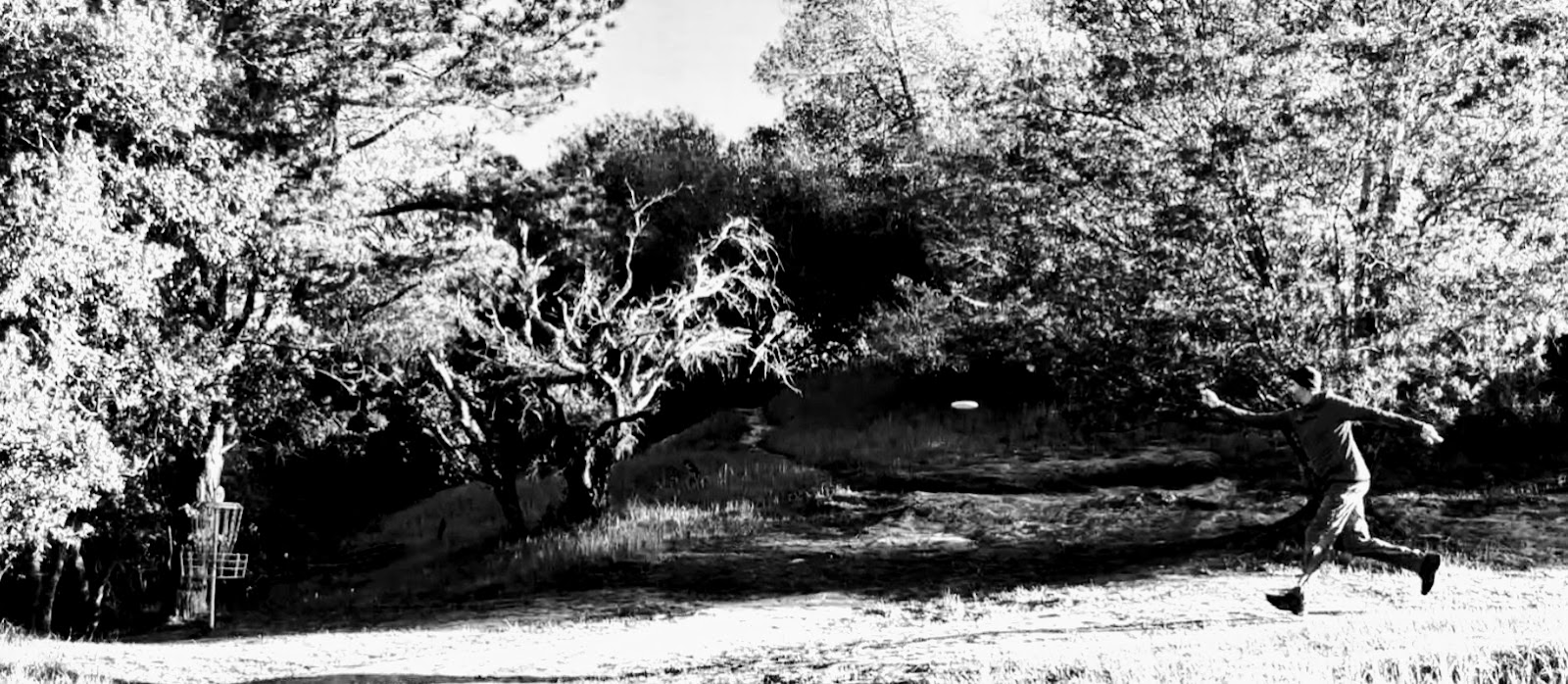
Disc golf is a game for all ages and growing rapidly among seniors seeking affordable forms of recreation.

The cost/benefit breakdown is so compelling, in fact, and its courses so adaptable to available terrain and maintenance-free, that while disc golf is now embraced nearly everywhere it is presented, disc golf-related non-profits focus on areas where free and low cost wellness options can have the greatest impact.

New York City is a bit of an outlier for the Paul McBeth Foundation, the mission of which is to “develop and introduce sustainable disc golf experiences in underserved locations with limited or no access to the sport.” More typical locations are in Mexico, Colombia, Uraguay, Uganda, Kenya, and Bulgaria. Those places are ideal because, for many there, funds for any kind of leisure activity are nonexistent. Like futbol, very little is required to play the game at the most basic level. The population density of NYC offers the opportunity to reach a more diverse population in the U.S., which is also important, and the appeal of free or nearly so seems to be just as relevant to students, families, and many seniors in New York City.

Getting back to that pull quote. The White-Elsewhere-Males alluded to were likely there responding to a call from the parks department to come play the course and provide feedback. Undoubtedly they shared details about the sport with anyone who asked, and a few who didn’t.

An impressive percentage of those who play disc golf eagerly recruit others to the sport without hesitation precisely because it is supremely accessible and available to everyone. They have discovered a wonderful thing and feel obligated to share it. Sounds corny, but it’s true. They’re hoping you and your neighbors (especially those with kids) at least give it a try.

Over the summer I had the opportunity to work with the Helen Rucker Center for Black Excellence on the CSU campus in Monterey, CA. I and others shared disc golf as part of a STEAM summer camp for local teens. Last week I did the same with a group of 50 neuroscientists from a Bay Area biotech company.

Both groups had a great time, and I know from experience that multiple individuals will play again soon. None of them will be shut out due the cost, or being made to feel unwelcome (unless they run into Ms. Golnick in Highland Park), or any other reason other than not having a course near enough. If they get hooked, they might even push their own local leaders to install a course. That is essentially how the sport has grown so steadily for the past 4 decades: A grassroots network unlike any other.

More than 10 years ago local disc golfers in Watsonville, CA installed a course in a community largely populated by Hispanic agriculture workers. They raised funds for the equipment and spent hundreds of hours clearing brush and hauling trash.

It took a little time, but the mix of people playing the course now looks like the community itself. Two young Hispanic players from the area who discovered disc golf there now play the sport professionally. One of them volunteered at the Helen Rucker Center event I just mentioned, teaching other teens disc golf.
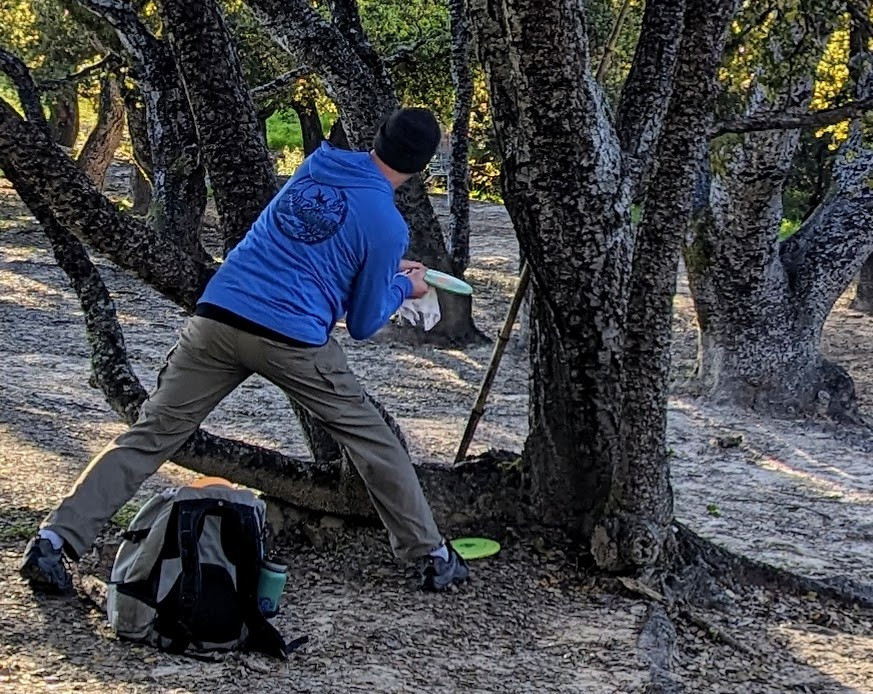
Go ahead and raise the alarm if the disc golf course straddling Brooklyn and Queens endangers other park users or signage is insufficient. But complaining about a small area of your park being set aside for disc golf (between two larger areas already set aside only for softball), well that is just weak and transparently selfish, and frankly lazy for a supposed expert on social and cultural analysis.

To go further and insinuate that disc golf courses are some kind of Trojan horse designed to help outsiders breach the walls of “your” community? Well, that’s just absurd.

techdisc disc golf measure your throw

School of Disc Golf: now featuring the power of TECHDISC

Hello there, this is Jack Tupp, Owner and lead instructor at School of Disc Golf.

Part of my 2023 disc golf summer was spent familiarizing myself with an amazing piece of technology called TECHDISC. I’ve already used it with several clients and have now fully incorporated it into both types of lessons we offer; in-person and virtual.

Here is a brief summary of what TECHDISC is and what it does:

  • TECHDISC is the name of the company, as well as the company’s flagship (and only) product
  • The product, which sells for $299, is a piece of hardware; a small rubberized puck that is precisely and permanently attached to a disc at their factory. Customers can choose the disc type and weight.
  • The puck contains sensors that track the disc’s speed, spin rate, launch rate, hyzer angle, and wobble rate upon release
  • The data collected by the puck is transmitted via Bluetooth to the user’s phone, tablet, or laptop, where it is displayed numerically and graphically and also stored securely in the user’s account on TECHDISC servers
  • The software platform also enables users to label and sort throws to gain additional insights
  • So far, TECHDISC has been so popular they’ve gone through several cycles of preorders. In other words, they can’t make ’em fast enough!

I’m working on a more comprehensive review of TECHDISC to be posted soon, but after extensive use of the tool and platform over the last few months these are my impressions of how TECHDISC can be used to improve one’s disc golf game— and how we’ll be using it at School of Disc Golf moving forward.

techdisc in school of disc golf private lessons

Using TECHDISC with clients hasn’t changed what I teach in lessons, nor has it altered how I teach. At least not very much. But it has supercharged both in two ways I noticed right away.

A big part of my private lessons — especially with newer players — is explaining how to generate arm speed and spin, and how to control the direction and trajectory of the disc. In other words, how to throw further and “straighter.” Before TECHDISC, my methods produced consistent results, but quite often success is delayed, at least for a time, by the fact that adopting proper technique can feel strange.

I would explain mechanical changes and drills to a client, and together we’d assess their throws using my eyes and experience and the client’s feel. But trusting that new feel can take time. Having the quantification and scientific measurement of TECHDISC, however, is powerfully different. It provides an irrefutable level of confirmation — positive or negative — to both student and teacher. Numbers don’t lie, as they say.

Speaking of numbers, the other instant win using TECHDISC with new disc golfers involves explaining the differences between discs, flight numbers, and how to select the correct disc for each circumstance— and why that answer changes depending on a wide range of factors. TECHDISC includes a flight simulator that allows us to see how tweaking throw characteristics (and also disc characteristics) changes the flight of a disc.

The Flight Simulator lets users adjust both disc and throw characteristics, then use the 3D Throw Viewer to see how each change affects the flight of the disc.

Having a hands-on tool that lets someone change disc and throw numbers to create hyzer flip and forced flex shot lines that end up in the same place communicates important info in a much more memorable way.

using techdisc IN virtual lessons

We have developed an excellent methodology over the years to serve those who can’t make it to Santa Cruz, but as with everything else, communicating via Zoom and email and texts is a little less effective than being in the same location.

The most important thing for me in using it as a training tool is that it accurately reflects adjustments a client makes over the course of our work together. It does.

The concrete metrics of TECHDISC permit no message distortion— they are what they are. Clients know exactly where they stand in terms of speed and spin, and they gain a proper understanding of less intuitive factors like nose angle, hyzer angle, and launch angle. As an instructor, knowing the exact numbers for each throw I see on a video call makes an even bigger difference than when using it with an in-person client. I may misinterpret something I see, especially when it’s on a screen and the angle is bad, but I can trust the numbers.

I’ll go into more detail soon in a full review, but I’ve used my TECHDISC enough by now to know it is consistent from throw to throw. The most important thing for me in using it as a training tool is that it accurately reflects adjustments a client makes over the course of our work together. It does. When my clients own their own TECHDISC, they can share their throw data between sessions, and I can trust that data. It provides scientific data that confirms when they do X, the results are Y. Over time, even more patterns and trends will emerge, especially if they take full advantage of the tagging feature.

TECHDISC automatically sorts throws by type and release angle, and lets you manually label and sort in numerous other ways.

using techdisc on your own

You can of course use a TECHDISC on your own. At the very least you’ll have the coolest disc golf gadget around, one-upping the rangefinder crowd. If you expect the ability to capture and slice and dice all that data to translate into lower scores, though, that will largely depend on your ability to figure things out on your own. If you’ve had success in the past watching YouTube videos and implementing changes, and you understand technical disc golf terminology, TECHDISC should provide you with all the benefits described above.

If, however, you’re on the other end of the spectrum (many of my current clients tell me they found my website after trying and failing to watch videos and develop on their own), please remember that TECHDISC is a measurement tool combined with good database tools. It won’t tell you how to change those numbers. But, hey, that’s what me and my fellow disc golf instructors are for, right?

Contact us if you’d like to schedule a TECHDISC-powered lesson or have a question, or book online directly to reserve a date and time right now.

FrisbeeGolf Friday, May 26, 2023

Last week in the world of disc golf, I played in my club’s weekly bag-tag competition, early A.M. as usual. The “flex start” format allows groups to play throughout the day. Because we use Udisc for scoring, that enables players to keep an eye on the scores not just when they are playing but before and after, as well.

Club members who play in the afternoon can watch the scores to see how the course is playing that day— and make note of the current score to beat.

It works the other way for me and my Breakfast Club buddies. If I shoot at least a decent round I’ll check back occasionally on my phone to see how it holds up. If I shoot a really solid or great round I’ll watch to see how long it stays on top of the leaderboard or at least in the top 5.

This is a pretty great enhancement to casual competition, and thanks to Udisc it gets even better. Their live scoring features let us follow other groups’ scores hole-by-hole, so after playing a clean round (other than that roll-away triple bogey) on a very tough layout, I watched and waited. After moving up and down on this list as new players started and others finished, I ended up pretty much where I expected.

The early morning rounds are special anyway, regardless of the associated competition of bag-tags. Birds are chirping and the course is mostly empty. We’re out there together, three or four of us, eschewing our warm beds and embracing (on this day) a blanket of fog in the air and water dripping from every blade of grass. It’s more than disc golf. As my mom would say, “It’s an adventure!”

Speaking of adventures, a company called Humbo asked me to share their list of the best disc golf destinations in the world. Let me know if you agree. What did they miss? Which ones have you visited?

Bag-tag Thursdays are about growth. One day my friend will emerge from his disc golf cocoon as a beautiful, 950-rated butterfly!

Before I share a few “disc golf makes good” stories, as is my custom, I want to share why I do it. I’m hoping people pick up on the common themes that permeate these accounts of growth in our sport. More often than not they involve people volunteering, donating, and sharing their expertise because they appreciate disc golf so much they feel a kind of obligation to share it.

For instance, thanks Brad Silvers and others the town of Howland, OH has Tiger Town Disc Golf Course, while Trigg County, KY used restaurant tax money and a host of volunteers to build its new 18-hole course. And then there’s Alex Dowley, assistant tennis coach at Albion College in Michigan. He’s doing what he can to grow disc golf there, where will may someday be the HEAD disc golf coach!

For those who didn’t see the cool buy o’ the month, here it is again: The handy-dandy product that serves as a stylish car seat cover, disc golf practice target, and beach towel— just not all at once.

The grommets enable it to be hung up, and the regulation size basket for aiming will hopefully reduce the times someone asks why you’re launching Frisbees at a towel. Get one before they’re gone!

Finally, this week’s disc golf news from the Canadian Front. Moosejaw is getting another 18-hole disc golf course, because one is never enough. My friend Brett in Saskatoon will play them both and report back. Have a great holiday weekend. Let freedom, and disc golf chains ring! And remember those who made it possible.

FrisbeeGolf Friday, April 14, 2023

College Disc Golf, Air Force Disc Golf in Japan, Jack Tupp on Amazon, and the Ground-Up Approach to SAving Strokes.

Last week in the wind-whipped world of disc golf, the College Disc Golf National Championship went down pretty much as expected. WPI (Worcester Polytechnic Institute) finished a respectable 8th, between Kentucky and Texas A&M. Meanwhile, Lenexa, KS finally opened a course 20 years in the making. Officers at the Yokata Air Base in Western Tokyo did not blink, and within days announced their own new disc golf installation.

Meanwhile in the world of School of Disc Golf, aka, Play DisGolf, Inc., aka, me, I was surprised to learn my book Three Paths to Better Disc Golf is only two ratings shy of 100 on Amazon. (I had no idea! You see, I’m pretty shall we say “hands off” when it comes to my social media marketing — eh-HEM, Slacker! —  and not as up-to-date on these things as I should be.) If you’ve read the book, post a review and help it hit triple digits!

disc golf book, disc golf lessons

I want to share a few snippets from past reviews as feedback like this is extremely gratifying and humbling at the same time.

I did not expect how many of the suggestions just clicked – reflections of things I know to be true from my work and personal life that I had simply never applied to my recreational passion – disc golf. So far my scores are trending in the right direction, but more than any of that, practicing “disc golf in a vacuum” has allowed me to enjoy my time on the course even more. Highly recommend!”

“This is an awesome read, Being new to the sport I was a little confused about some aspects of the game. The author makes great sense and is simple to understand. If you take your game seriously you owe it to yourself to check it out.”

“I’ve read several of the most popular disc golf books and this is by far my favorite. Excellent treatment of the subject and from someone who can actually write!”

Those were some of my favorites, each for a different reason. I even liked the lowest-rated review, which simply said “Be the Disc, Danny.” An association with one of the best movies ever can’t hurt, right?

I also have deep ties to Michigan Disc Golf (what’s up, WinniCrew?), and this campaign to build an epic course and honor a legend is a perfect example of why and how disc golf has come so far and ain’t slowing down! Help ‘em out if you can, especially if you’re near the Upper Peninsula.

Our private course is showing signs of a mini-super bloom, and the season for teambuilding events and group activities is getting started. Contact me directly if you’re interested in booking a date or learning more.

Hole 7, looking back to the tee.
Basket of Hole 5 in the Hazard Island location.

This week’s flashback post from the blog is a 2-Parter. Big mistakes can obviously cost you big-time, but lots of little things can add up fast. Knowing how to adjust to the vagaries of the terrain, or taking a Ground-Up Approach to Saving Strokes is key.

Part 1 focuses on up/down and left/right slopes, while Part 2 addresses varying tactics based on varying playing surfaces. Just to tie this week into a neat little bow, these are also chapters in that book I mentioned.

May your weekend include time to throw discs and enjoy their flight.

FrisbeeGolf Friday, April 7, 2023

World record in nz, disc golf lingo, disc golf philanthropy, and the march madness winning coach practices disc golf?

Last week in the warm, furry underbelly of disc golf, a new distance world record was set. Seven year old Sarah Wadsworth of New Zealand launched their disc 62.07 meters, or a little more than 200 feet. Sources are unclear on whether it was a chuck or a huck.

According to Udisc, Morley Field in San Diego is the most-played disc golf course in the world. After an improbable run SDSU last week lost to UConn in the NCAA men’s basketball title game. According to these fools UConn coach Dan Hurley practiced disc golf right after the game, but he’s really just tossing . . . you guessed it . . . a Frisbee.

This week’s flashback is to a post about disc golf lingo— one of my most popular ever. It’s also a chapter in The Disc Golf Revolution, right between “The Complexities of Disc Flight” and “Disc Golf on the Road.”

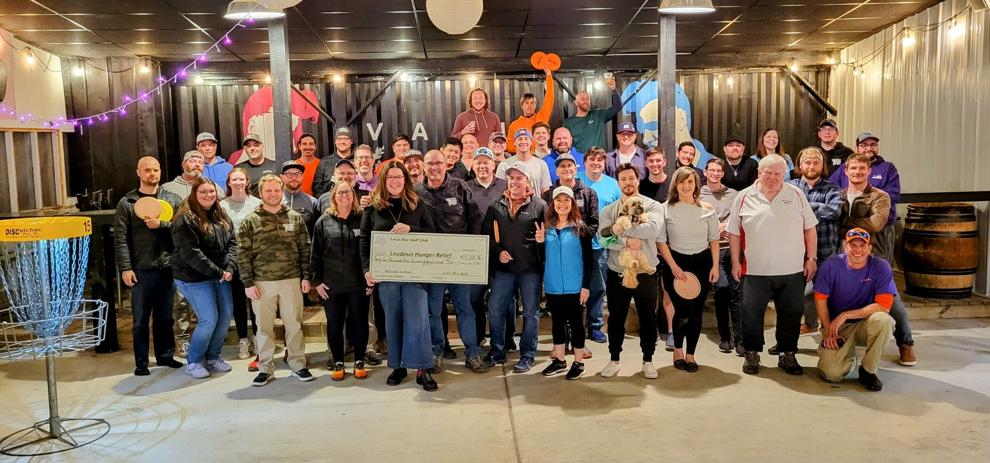
Loudoun County must be LOCO about its disc golf community.

Local disc golf clubs like the Trumbull County Disc Golf Association not only routinely provide the necessary labor and funding to build new courses (go to Play Discgolf on Facebook and search #newdiscgolfcourse to see a ton more). They also raise funds for the community, and every winter clubs around the world host “Feed the Hungry” events. Shout out to the LoCo Disc Golf Club in Loudoun County, VA, first off first the cool spelling of your name, but also for being a shining example of disc golf’s philanthropic nature. 40k is not chump change, and they do it again and again!

Playing early morning rounds has always been part scheduling necessity for me and part preference. The course always seems more beautiful and dramatic at first light. And speaking of drama, my favorite arch nemesis is back, and he wants my tag!

Hole 2 long at DeLa: Do NOT miss your line.

DeLaveaga is set in The Long for the upcoming Masters Cup, and pretty much every hole requires skill, precision, and nerves of stainless steel.

This scrubby oak on hole 4 at DeLa is known as the Catcher’s Mitt, and that drive was most definitely a strike.

Enjoy your weekend, especially any disc golf you get to play. It’s a gift!